What Are Wide Mouth Plastic Bottles Used For?

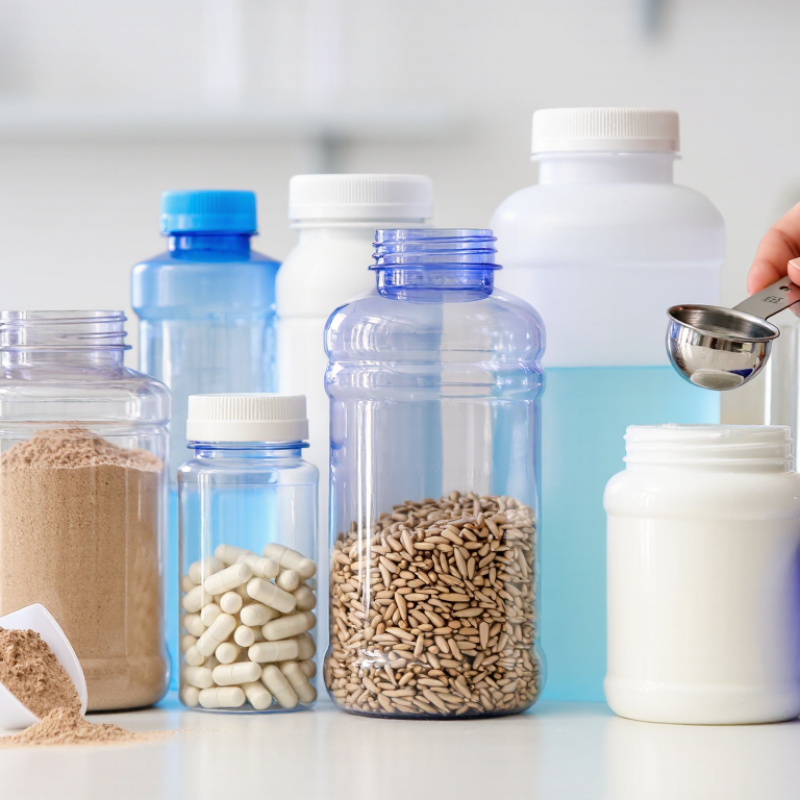
Wide Mouth Plastic Bottles are practical containers designed for products that need easy filling, scooping, cleaning, or removal. Their broad openings suit protein powders, vitamins, snacks, creams, seeds, laboratory materials, and household products. A hand can reach inside. A measuring scoop can move without scraping the neck.

Market data shows why this format remains relevant. Grand View Research valued the global plastic bottles market at approximately USD 75.9 billion in 2022. It also projected continued growth through 2030. These figures cover many bottle types, not only wide-mouth designs. That distinction matters. Packaging statistics can look precise while hiding important product differences.

Packaging expert Walter Soroka defines packaging as “the science, art, and technology of enclosing and protecting products for distribution, storage, sale, and use.” His statement explains the wider purpose of Wide Mouth Plastic Bottles. The bottle must protect contents, support accurate dispensing, and remain comfortable during repeated use. For powders, a stable base and a tamper-evident closure can prevent messy handling. For creams, the opening improves access but may increase exposure to air and fingers.

Material selection also deserves attention. High-density polyethylene offers toughness and chemical resistance. Polypropylene can tolerate higher temperatures in selected applications. Recyclability depends on the resin, additives, labels, closures, and local collection systems. It is not automatic.

The best choice is rarely the cheapest bottle. Product density, moisture sensitivity, filling equipment, and user behavior all matter. Some claims need testing, not confident wording. That is the overlooked part.
What Are Wide Mouth Plastic Bottles Used For?

Wide-Mouth Bottles Defined: Openings Commonly Range from 38 to 110 mm

What Are Wide Mouth Plastic Bottles Used For?

Wide-mouth plastic bottles are defined by openings commonly ranging from 38 to 110 mm. This design gives users more room for scooping, pouring, cleaning, and refilling. They are often used for protein powders, nutritional products, spices, pet supplements, creams, and laboratory materials. A 63 mm opening may suit powdered products, while a 100 mm opening allows larger scoops or solid pieces. The right size depends on product flow, fill weight, and user access.

Grand View Research valued the global plastic bottle market at approximately USD 87.71 billion in 2023. Its analysis also identifies convenience and lightweight packaging as major market drivers. Yet, a wider opening is not automatically better. It may increase material use, sealing pressure, and exposure to moisture. From a packaging evaluation perspective, I would check the neck finish, liner fit, torque range, and drop resistance. Small design details matter. The U.S. Environmental Protection Agency reported 14.5 million tons of plastic containers and packaging in municipal waste during 2018, with only 13.1% recycled. That figure deserves careful reflection when selecting bottle material and closure systems.

Tips: Match the opening to the product texture. Use a moisture barrier for hygroscopic powders. Test repeated opening and closing. Confirm food-contact documentation before production. Measure real user behavior, not assumptions. A clean scoop is useful. An oversized neck can still create waste.

What Are Wide-Mouth Plastic Bottles Used For?

Wide-mouth bottles have openings commonly ranging from 38 to 110 mm. Larger openings make it easier to fill, empty, clean, and handle thick products or solid items.

How to read the chart: Smaller wide-mouth sizes are commonly used for pourable liquids, powders, and supplements. Openings from about 63 mm upward are better suited to thick contents, chunky foods, bulk solids, and products that require easier scooping or cleaning. Exact bottle and closure dimensions can vary by container design.

Material Choices: PET (#1), HDPE (#2), and PP (#5) Packaging Grades

What Are Wide Mouth Plastic Bottles Used For?

Wide mouth plastic bottles suit products that need easy scooping, pouring, or cleaning. Common uses include powders, creams, granules, nutritional mixes, and thick household liquids. Their broad openings also simplify filling lines and visual inspection. According to the OECD’s Global Plastics Outlook 2022, packaging creates about 40% of global plastic waste. Material selection therefore affects both performance and environmental impact.

PET (#1) offers strong clarity, low weight, and good dimensional stability. It works well when users need to see the contents. PET is less suitable for some high-temperature filling processes.

HDPE (#2) provides toughness, moisture resistance, and broad chemical compatibility. It often fits heavier products and frequent handling. The U.S. Plastics Industry Association identifies HDPE as a common packaging resin, but resin code #2 does not guarantee local recyclability.

PP (#5) tolerates higher temperatures than PET and supports durable closures. It can suit refillable formats, warm filling, or products needing repeated opening. However, PP may appear less clear and can warp if processing conditions are poorly controlled.

PlasticsEurope’s Plastics—The Fast Facts 2024 reports that packaging represents roughly 40% of European plastics demand. That figure encourages lighter designs, but lightweighting can reduce stiffness.

No resin wins every test. Package engineers should check drop resistance, seal performance, product compatibility, and recycling access together. Sometimes, a thicker bottle performs better overall.

Food and Supplement Uses: Easier Filling, Scooping, and Powder Access

Wide mouth plastic bottles are practical for food powders and dietary supplements. Their broad openings let operators fill products with fewer spills. They also make scooping easier at home. A spoon can enter without scraping the bottle neck. Users can see remaining powder clearly. Small detail, big convenience.

The Council for Responsible Nutrition reported in its 2024 Consumer Survey that 75% of U.S. adults use dietary supplements. This large user base increases demand for packaging that supports accurate, repeatable access. Grand View Research valued the global dietary supplements market at approximately $177.5 billion in 2023. Wide openings can support protein powders, drink mixes, fiber products, and powdered meal ingredients. They also simplify manual filling during small-batch production. That matters for food processors with changing formulas.

However, wide mouth designs are not perfect. More opening area can increase exposure to humidity, dust, and accidental contact. A reliable container should use suitable food-contact plastic, a secure closure, and tamper evidence. Clear lot coding also supports traceability and quality checks. The Institute of Food Technologists emphasizes controlling moisture because it can affect powder flow and shelf stability. In practice, the best bottle balances access with protection. A scoop may fit well, yet the lid can still trap powder around its threads. That detail deserves testing before production.

Pharmaceutical and Cosmetic Uses Under FDA 21 CFR 177 Requirements

What Are Wide Mouth Plastic Bottles Used For?

Pharmaceutical and Cosmetic Uses Under FDA 21 CFR 177 Requirements

Wide mouth plastic bottles suit tablets, powders, creams, scrubs, and thick cosmetic formulas. Their broad openings simplify filling, scooping, cleaning, and visual inspection. They also accommodate liners, induction seals, and desiccants when moisture control matters.

Common materials include HDPE, polypropylene, and PET. HDPE and polypropylene may fall under FDA 21 CFR 177.1520. PET is addressed under 21 CFR 177.1630. However, food-contact compliance does not automatically prove pharmaceutical suitability. Drug packaging must also support container-closure integrity, stability, and compatibility under 21 CFR 211.94. The opening matters.

Cosmetic containers require the same practical discipline. Packaging should not leach substances, alter fragrance, or contaminate the formula. FDA generally does not preapprove cosmetic packaging, but adulterated products remain prohibited under federal law.

McKinsey’s 2023 packaging survey covered more than 5,000 consumers across 11 countries. It found recyclability remained a major packaging preference. PMMI’s 2024 industry outlook also emphasizes material reduction and operational efficiency. Lightweighting can help, but thinner walls may reduce drop resistance. That trade-off is easy to underestimate.

A clean-looking bottle is not proof of compliance. Lot-specific resin documentation, migration evaluation, torque checks, and accelerated stability testing create stronger evidence. In practice, the best bottle is not merely wide. It is chemically compatible, securely sealed, and traceable through every production stage.

Choosing Closures, Barriers, and Recyclability by USP <661.1> Criteria

What Are Wide Mouth Plastic Bottles Used For?

Choosing Closures, Barriers, and Recyclability by USP <661.1> Criteria

Wide mouth plastic bottles suit powders, tablets, creams, granules, and thick food ingredients. Their broad opening allows easier filling, scooping, cleaning, and visual inspection. In practice, the closure often determines product protection. A screw cap with a liner can limit moisture entry, while an induction seal adds tamper evidence and another barrier layer. The wrong fit may leave a visible gap. Small gaps matter.

USP <661.1> evaluates plastic materials used in pharmaceutical packaging, including resin composition, additives, and potential extractables. It does not prove that every finished bottle protects every product. Moisture-sensitive contents may require high-density polyethylene with a suitable liner. Oxygen-sensitive products may need an added barrier structure. Light-sensitive contents can require an opaque or pigmented container. A packaging engineer should also review the complete system under USP <661.2>, including the bottle, closure, liner, and seal.

Recyclability needs practical testing, not attractive claims. The OECD Global Plastics Outlook reported that only 9% of global plastic waste was recycled in 2019. Its data also showed packaging created about 40% of plastic waste. A mono-material bottle can simplify sorting, but closures, labels, pigments, and liners may reduce recovery quality. A recyclable design can still fail locally if collection systems are limited. That uncomfortable detail deserves attention. Testing resin compatibility, barrier performance, closure torque, and recycled-content consistency can expose weaknesses before production.

What Are Wide Mouth Plastic Bottles Used For? — Choosing Closures, Barriers, and Recyclability by USP <661.1> Criteria
Typical Use Common Bottle Material Why a Wide Mouth Is Useful Recommended Closure Configuration Barrier Considerations Recyclability Considerations USP <661.1> Evaluation Focus
Tablets and capsules HDPE or polypropylene (PP) Allows easy filling, counting, dispensing, and access to solid oral dosage forms. Continuous-thread screw cap with an induction seal or other tamper-evident feature; desiccant can be integrated when needed. HDPE generally provides good moisture resistance. Additional moisture protection may be needed for hygroscopic products. Prefer a mono-material bottle-and-cap system where local recycling rules accept both polymers. Avoid unnecessary metallic or multi-layer components. Confirm the material identity, applicable physicochemical properties, and biological reactivity requirements for the plastic material used in the packaging system.
Powders and granules HDPE, PP, or PET depending on product sensitivity Supports scooping, powder transfer, and cleaning of the container interior. Screw cap with a liner, plug seal, or induction seal to limit leakage and contamination. Moisture vapor transmission is often the key risk. A liner or foil seal may improve protection, but the seal material must be compatible with the product. Paper, foil, foam, and polymer liners can complicate recycling if they remain attached. Design components for easy separation where practical. Assess the plastic material of construction and any relevant extractables or compatibility concerns as part of the overall packaging qualification.
Gummies and chewable products HDPE or PET Provides a large opening for convenient removal of irregular or sticky units. Tamper-evident screw closure with a tight-fitting liner or induction seal. Protection from moisture, oxygen, and aroma transfer may be important. PET can provide a stronger oxygen and aroma barrier than standard HDPE, depending on design and wall thickness. Clear PET and natural HDPE are commonly recyclable where accepted; colorants, sleeves, and attached liners may affect sorting or recycling quality. Verify that the selected polymer and additives are suitable for the intended pharmaceutical packaging application under the applicable USP chapter requirements.
Dry ingredients and nutritional powders HDPE or PP Accommodates scoops and reduces product loss during dispensing. Wide-mouth screw cap with a plug seal, induction seal, or gasketed liner. Moisture control is usually more important than oxygen control. Desiccants and high-integrity seals can supplement the bottle barrier. Use compatible, readily separable components and minimize dark pigments or complex laminates that may reduce recycling options. USP <661.1> addresses the plastic material of construction; moisture-barrier performance and seal integrity require separate package-performance testing.
Topical creams, ointments, and gels PP, HDPE, or multilayer plastic selected for compatibility Facilitates filling and removal of viscous products and makes container cleaning easier. Threaded cap with a liner, plug seal, or dispensing insert; the closure should limit leakage and product backflow. Evaluate sorption, permeation, odor transfer, and chemical interaction because semisolids may contact the package for long periods. Multilayer structures can improve barrier performance but are generally more difficult to recycle than single-polymer designs. Consider material identity, additives, and biological reactivity, together with product-specific compatibility and extractables/leachables studies.
Diagnostic or laboratory reagents HDPE, PP, or PET selected according to reagent chemistry Allows controlled access for scooping, sampling, or transferring contents while supporting visual inspection. High-integrity screw cap with a chemically compatible liner and tamper-evident seal where required. Barrier needs depend on sensitivity to moisture, oxygen, light, and volatile loss. Opaque or light-protective packaging may be required for photosensitive contents. Separate recyclable packaging from hazardous residues before disposal. Chemical contamination can prevent normal household recycling. Confirm that the polymer and additives are appropriate for the intended contact conditions; USP <661.1> does not replace chemical compatibility or stability testing.
Clinical and institutional bulk packs HDPE or PP Improves access for frequent dispensing, inventory handling, and replenishment. Durable screw closure with tamper evidence; a child-resistant design may be required for certain products and markets. Package performance should be matched to repeated opening, storage duration, humidity exposure, and product sensitivity. Use standardized polymer components and avoid permanently bonded materials when equivalent recyclable designs are available. Evaluate the plastic material under the applicable USP requirements and document closure, seal, and container performance separately.
Consumer refill and reuse applications HDPE or PP, selected for repeated-use durability Supports easy washing, refilling, and removal of bulk contents. Reusable screw cap with a replaceable or durable gasket; tamper evidence may be added for first opening. Repeated washing, temperature changes, and exposure to cleaning agents can affect material performance and closure integrity. Design for long service life, clear material identification, and eventual separation of components. Reuse suitability does not automatically mean pharmaceutical compliance. USP <661.1> assessment should be considered alongside repeated-use, cleaning, migration, and product-contact studies.