China Top Cosmetic Packaging Suppliers for Global Buyers?
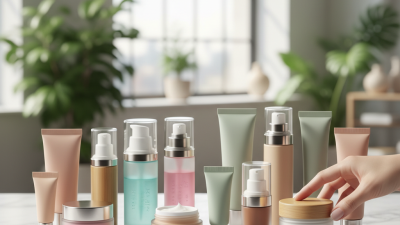
Choosing a China-based supplier for Cosmetic Packaging can shape more than a product’s appearance. It affects filling efficiency, shipping costs, shelf appeal, and customer experience. Global buyers may find factories offering glass bottles, jars, tubes, airless pumps, and custom decoration. Yet a polished catalogue does not prove that a supplier can deliver consistently. Details matter.
A sample should be checked in practical use. Does the pump dispense smoothly with the intended formula? Does the cap stay secure during handling? Are the bottle’s weight, color, and printed finish consistent across samples? These small checks can reveal issues before a large order is placed. Buyers should also ask about material specifications, quality-control procedures, production capacity, lead times, and export support. Clear documentation is useful, but it is not a substitute for reviewing physical samples and confirming requirements directly.
This guide introduces leading Chinese cosmetic packaging suppliers and the strengths they may offer to international brands. It also outlines questions buyers can use to compare capabilities, from mold development to decoration and order flexibility. Supplier claims should be evaluated carefully, since capabilities and service levels can vary by facility and project. A lower quoted price may look attractive; it may not include every finish, inspection, or shipping cost. There is no perfect checklist. The right partner is the one whose product quality, communication, and production process fit your needs—and whose claims hold up when examined closely.
Understanding China’s Cosmetic Packaging Supplier Landscape
China’s cosmetic packaging supplier landscape is broad, layered, and highly specialized. According to Grand View Research, the global cosmetic packaging market reached approximately USD 32.74 billion in 2023. It may grow at a 3.8% CAGR through 2030. This demand supports many Chinese suppliers, from injection molding factories to complete packaging integrators.
The market is not one uniform network. Some suppliers focus on glass bottles, while others produce tubes, jars, pumps, or paper components. Buyers should examine production depth, not only catalog size. A factory may offer attractive samples but outsource decoration or tooling. That can affect lead times and consistency. Ask for material specifications, mold ownership, batch records, and inspection procedures. Request samples from actual production lines.
Sustainability is also changing supplier selection. A 2023 Smithers report identified recycled content, lightweighting, and refill systems as major packaging development priorities. Chinese manufacturers increasingly provide PCR plastic, mono-material structures, and lower-weight components. However, environmental claims require evidence. Check recycled-content percentages and available test documents. Confirm whether local processing can maintain color, torque, and sealing performance. The picture is not perfectly clean. Supplier websites rarely reveal every production risk. Independent audits, pilot orders, and pre-shipment inspections remain practical safeguards for global buyers.
China Cosmetic Packaging Supplier Landscape: Market Demand Proxy
China’s cosmetics retail sales increased from RMB 299.2 billion in 2019 to RMB 414.2 billion in 2023. This demand trend helps explain the expanding purchasing environment for cosmetic packaging suppliers, including manufacturers of bottles, jars, tubes, closures, and secondary packaging.
Source: National Bureau of Statistics of China, total retail sales of cosmetics by year. Values are shown in RMB billions and do not represent revenue from any individual supplier or brand.
Key Types of Cosmetic Packaging Made in China
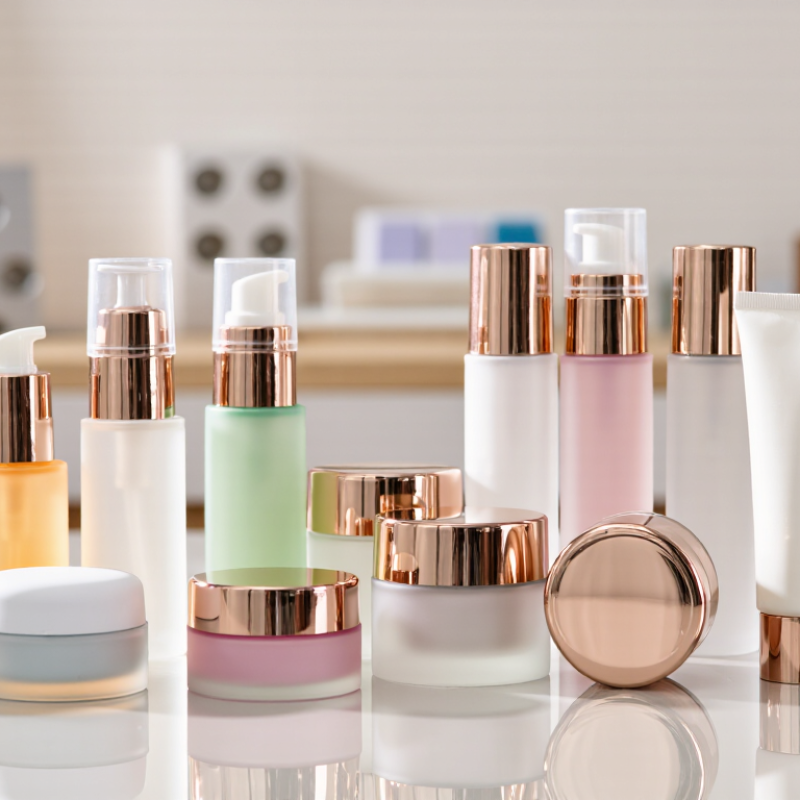
China’s cosmetic packaging industry produces practical formats for skincare, makeup, and personal care products. The main options include bottles, jars, tubes, compacts, and sachets. PET and HDPE bottles suit cleansers, lotions, and shampoos. They are lightweight and resist everyday handling. Glass bottles add a heavier, more premium feel. Jars work well for creams, masks, and solid balms. Small details matter.
Tubes are popular for facial creams, gels, and toothpaste-like cosmetic formulas. They support controlled dispensing and reduce direct contact with the product. Airless pumps help protect sensitive formulas from repeated air exposure. Dropper bottles provide measured application for serums and oils. For pressed powders, compact cases usually combine a pan, mirror, and inner tray. Aluminum components can create a cool, durable surface, though they may increase shipping weight.
Experienced buyers usually request material samples, decoration proofs, and compatibility testing before placing large orders. Pump performance, cap fit, leakage resistance, and color consistency deserve close inspection. Packaging that looks excellent in a sample may change during mass production. That is an uncomfortable reality. Suppliers can offer custom molds, screen printing, hot stamping, and recyclable material options. However, small orders may face higher unit costs or fewer decoration choices. Clear specifications, production photos, and inspection records make communication more reliable for global buyers.
How to Assess and Compare Chinese Suppliers
How to Assess and Compare Chinese Cosmetic Packaging Suppliers
Selecting a Chinese cosmetic packaging supplier requires more than comparing unit prices. Request samples made from the same material and finish as production units. Check cap alignment, pump smoothness, wall thickness, color consistency, and surface scratches under bright light. Small defects often become expensive after filling.
Ask each supplier for material specifications, quality-control procedures, production capacity, minimum order quantities, and realistic lead times. A reliable factory should explain its inspection points clearly. It should also provide relevant test reports and documentation for your target markets. Confirm whether testing covers leakage, drop resistance, compatibility, and migration risks. The documents must be current and traceable.
Visit the facility when possible, or arrange a live video audit. Observe warehouse conditions, mold storage, labeling, and final inspection areas. Compare quotations line by line, including tooling, decoration, packing, transport terms, and replacement policies. Cheap pricing can hide unstable materials or weak quality control. That mistake is common.
Communication matters. Send the same technical brief to every supplier and record response times, questions, and revisions. Strong suppliers identify unclear details before production begins. Still, no factory is perfect. I would keep a small pilot order before committing to large volumes. It reveals problems that polished samples may conceal. Review corrective actions carefully, not only promises. A dependable supplier improves through documented evidence, consistent production records, and transparent communication.
| Assessment Dimension | What to Compare | Evidence to Request and Verify | Suggested Weight | Score (0–5) |
|---|---|---|---|---|
| Product quality and consistency | Dimensional accuracy, appearance, color consistency, closure fit, leakage performance, and batch-to-batch consistency. | Approved samples, written specifications, inspection criteria, test records, and documented procedures for handling defects. | 20% | Enter verified score |
| Material and product suitability | Whether the proposed bottle, jar, tube, pump, or closure is suitable for the formula, filling process, and intended use. | Material specifications, component drawings, compatibility or stability test results where available, and confirmation of the exact material grade. | 15% | Enter verified score |
| Quality management and traceability | Incoming material checks, in-process controls, final inspection, lot identification, and corrective-action practices. | Quality-system documents, sample inspection reports, lot or batch traceability examples, and relevant third-party audit records. Verify certificate scope and validity directly with the issuer where possible. | 15% | Enter verified score |
| Regulatory and documentation readiness | Ability to provide accurate, product-specific documents required for the destination market and packaging materials. | Material declarations, applicable test reports, technical data sheets, and other documents requested by the buyer or its compliance team. Confirm that documents match the actual product and market. | 15% | Enter verified score |
| Customization and development capability | Support for dimensions, color, decoration, tooling, prototypes, and design changes, including clear ownership and approval steps. | Prototype process, tooling terms, approved artwork and color-control procedures, sample lead time, and written confirmation of tooling ownership and maintenance terms. | 10% | Enter verified score |
| Capacity, minimum order quantity, and lead time | Production capacity for the required components, quoted minimum order quantities, and realistic production and sampling schedules. | Written quotations, production schedules, capacity assumptions, sample timelines, and records or references relevant to comparable orders. | 10% | Enter verified score |
| Export and logistics readiness | Experience preparing export orders, packing requirements, shipping documents, and delivery terms relevant to the buyer’s route. | Redacted examples of export documentation, packing specifications, carton details, and a clearly stated Incoterm and named place in the quotation. | 5% | Enter verified score |
| Sustainability information | Availability of verifiable information on recycled content, material options, recyclability guidance, and packaging reduction. | Product-specific material declarations and supporting documentation for any environmental claim. Check that claims identify the component and scope they cover. | 5% | Enter verified score |
| Communication and commercial clarity | Response accuracy, change control, quotation completeness, payment terms, and clarity about exclusions or additional charges. | Written quotations, specification confirmations, change records, and a named contact for technical and order follow-up. | 5% | Enter verified score |
| Total suggested weighting | 100% | Calculate weighted result | ||
Scoring guide: Use 0 for no usable evidence, 1 for major gaps, 2 for below requirements, 3 for acceptable evidence, 4 for strong evidence, and 5 for verified performance that meets or exceeds requirements. The weights are a suggested buyer comparison framework, not market statistics or a ranking of specific suppliers. Compare suppliers using the same product specification, order assumptions, and destination-market requirements.
Quality, Safety, and Sustainability Standards to Check
China’s cosmetic packaging suppliers should prove quality before promising low prices. A glossy sample can hide weak threads, uneven coatings, or loose pumps. Ask for material specifications, batch records, certificates of analysis, and inspection photos. Quality is visible.
Safety checks need practical evidence. Suppliers should follow ISO 22716 principles where relevant and control microbial contamination, heavy metals, and chemical migration. Test the filled package, not only the empty component. Compatibility testing can reveal odor transfer, cracking, leakage, or discoloration after heat exposure. Independent laboratory reports are more reliable than supplier declarations alone. Requirements also vary by destination market. This detail is often underestimated.
Sustainability needs measurable proof. The OECD’s Global Plastics Outlook reports 353 million tonnes of plastic waste were generated globally in 2019, while only 9% was recycled. Buyers should request verified recycled-content percentages, material traceability, and packaging weight data. ISO 14001 certification can support environmental management, but it does not automatically prove low-impact packaging. Life-cycle assessment is more useful when its boundaries are clearly stated. A supplier may offer recyclable packaging that local systems cannot process. That contradiction deserves attention. A small pilot order, third-party inspection, and documented corrective actions can expose weaknesses before full production. Mistakes still happen. Good suppliers show how they respond.
Steps for Sourcing Cosmetic Packaging from China
China Top Cosmetic Packaging Suppliers for Global Buyers?
Steps for Sourcing Cosmetic Packaging from China
Sourcing cosmetic packaging from China needs a documented process, not only a low quotation. Grand View Research estimated the global cosmetic packaging market at about USD 32 billion in 2022, with steady growth expected through 2030. This growth increases supplier choices, but also increases quality differences.
Define the packaging brief before contacting factories. Specify material, capacity, closure type, decoration, color tolerance, and annual volume. Request technical drawings, product samples, compliance documents, and recent quality records. Compare at least three suppliers using the same specification sheet. A beautiful sample can still hide weak pump performance or inconsistent wall thickness. That mistake is expensive.
Tips: Ask for a production-line video and a live factory audit when possible. Test samples with your actual formula, including leakage, compatibility, drop resistance, and hot-cold storage. The Smithers packaging sustainability reports show continuing pressure for lighter, recyclable, and more traceable packaging. Therefore, ask whether recycled content is verified and whether material claims are documented. Do not trust vague statements. Confirm minimum order quantities, tooling ownership, lead times, inspection points, and shipping terms in writing. A small pilot order is useful, although it may cost more per unit. It can reveal printing variation, assembly errors, or late responses before full production. Reflect after every sample round, because the cheapest supplier is rarely the lowest-risk supplier.
Related Posts
-
How to Choose the Perfect Cosmetic Packaging for Your Beauty Products
-
How to Choose the Best Cosmetic Packaging for Your Brand?
-

Essential Tips for Sourcing Amber Bottles Globally
-
Discover Premium Glass Bottles with Caps from China's Leading Manufacturers for Your Global Needs
-
7 Best Wide Mouth Glass Jars That Boost Your Preserving Efficiency by 30% in 2023
-
Top 10 Plastic Jars That Every Buyer Should Consider?