2026 Best Wide Mouth Plastic Bottle Types for Global Buyers
Choosing the right Wide Mouth Plastic Bottles requires more than comparing prices or catalog photographs. Global buyers must examine resin quality, neck dimensions, closure compatibility, wall thickness, and production consistency. A bottle may look strong on a screen yet deform during filling, transport, or storage.
Packaging authority Walter Soroka presents a useful principle: “Packaging is a system, not merely a container.” This idea fits wide-mouth designs especially well. Their larger openings support easier filling, cleaning, scooping, and product removal. They also demand careful control of caps, liners, seals, and torque settings. HDPE often suits durable household and industrial applications. PET can provide clarity, stiffness, and strong shelf visibility. The best material depends on the product, temperature, handling method, and required appearance.
Small details matter.
A serious comparison should review food-contact documentation, recycled-content claims, color stability, leakage testing, and supplier quality records. Buyers should also confirm sample performance before approving large production volumes. That step can expose hidden problems, such as uneven threads or caps that loosen after repeated use. No bottle wins every application. Even a well-designed option may perform poorly with the wrong closure or filling line. This article examines the 2026 best Wide Mouth Plastic Bottles types for global buyers, while recognizing an uncomfortable truth: rankings simplify decisions, but real performance depends on testing, honest specifications, and disciplined supplier verification.
Define Wide-Mouth Bottle Types by Neck Finish: 38, 48, and 63 mm
2026 Best Wide Mouth Plastic Bottle Types for Global Buyers
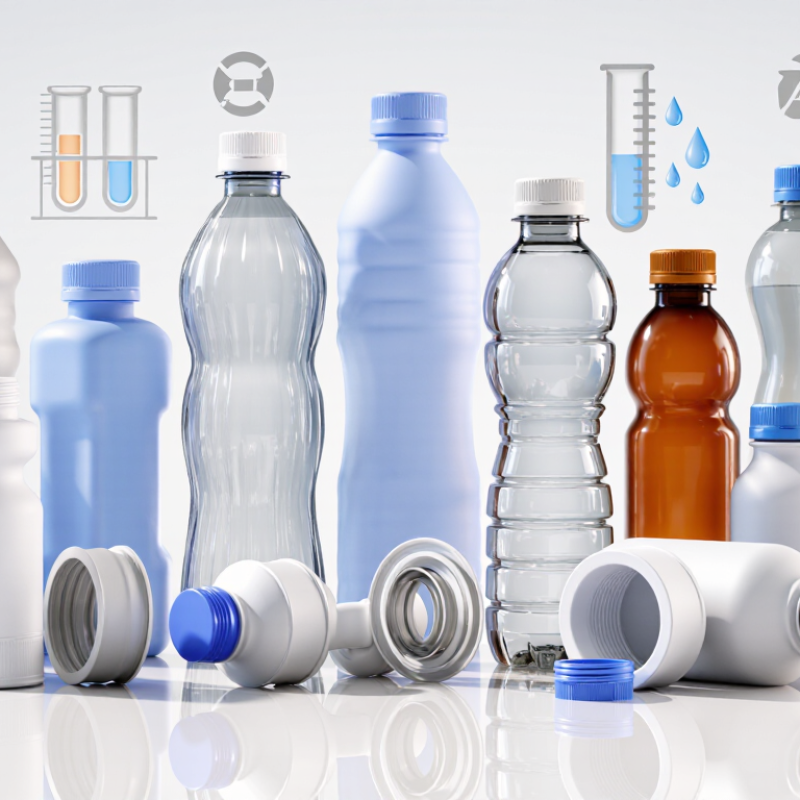
Wide-mouth plastic bottles are defined by their neck finish, not only by the bottle’s body shape. The 38 mm finish suits many liquid products, including sauces, supplements, and household powders. It supports compact closures and usually reduces material use. However, the opening may feel narrow when users handle thick contents or need a measuring scoop.
A 48 mm finish gives more hand access and faster filling. It works well for viscous liquids, granules, and products requiring frequent cleaning. During packaging evaluations, I check cap torque, liner contact, and thread alignment under repeated opening cycles. Small differences matter. A closure that feels secure on one bottle may leak on another if the neck tolerance changes.
The 63 mm finish offers the widest access for powders, tablets, larger particles, and easy spoon filling. It also gives operators better visibility during inspection. The tradeoff is a larger closure, higher packaging weight, and greater shipping volume. A wider mouth is not automatically better. I once favored a 63 mm opening for convenience, then found that its cap occupied too much warehouse space. Buyers should compare neck drawings, seal tests, filling equipment, and temperature exposure before approving samples. Supplier data helps, but physical testing remains essential.
2026 Best Wide Mouth Plastic Bottle Types for Global Buyers
Wide-Mouth Bottle Types by Neck Finish: 38, 48, and 63 mm
Wide-mouth plastic bottles are commonly specified by nominal neck-finish diameter.
The 38 mm finish is a compact wide-mouth option, 48 mm provides a larger access opening,
and 63 mm offers the widest access among the three sizes. Larger neck finishes generally
make it easier to fill, empty, clean, and package solid or semi-solid products. Actual
inner openings, threads, closures, and bottle capacities vary by packaging specification.
Compare PET, HDPE, and PP Using Densities of 0.90–1.40 g/cm³
2026 Best Wide Mouth Plastic Bottle Types for Global Buyers
For wide mouth bottles, resin density affects weight, buoyancy, stiffness, and shipping calculations. PET commonly measures about 1.30–1.40 g/cm³. It offers strong clarity and good dimensional stability for dry goods, beverages, and visible contents. HDPE usually ranges from 0.94–0.97 g/cm³. Its toughness suits bottles exposed to drops, warehouse handling, and temperature changes. PP is lighter, generally around 0.90–0.91 g/cm³, and performs well where repeated opening or moderate heat resistance matters.
Density is not the whole decision. A thick HDPE bottle may weigh more than a thin PET bottle. Wide openings also require careful neck design, because uneven walls can distort the closure fit. I have seen sample bottles pass visual checks but fail repeated cap testing. That is easy to overlook.
Global buyers should request resin density, wall-thickness maps, closure torque data, and migration or compatibility documentation. Test filled samples after stacking, vibration, and temperature cycling. PET can feel rigid but may crack under certain impacts. HDPE feels less rigid, yet often absorbs handling abuse better. PP can reduce freight weight, although its lower stiffness may require structural ribs. Recycled content can change color, odor, and consistency. Supplier data helps, but physical samples remain necessary. A simple density ranking can mislead.
2026 Best Wide Mouth Plastic Bottle Types for Global Buyers - Compare PET, HDPE, and PP Using Densities of 0.90–1.40 g/cm³
Material comparison for wide-mouth bottles used in food, powders, liquids, personal care, household, and industrial packaging applications.
| Material |
Typical Density
(g/cm³) |
Recycling Identification |
Appearance |
Barrier Characteristics |
Temperature Capability |
Chemical Resistance |
Best Wide-Mouth Bottle Uses |
PET
Polyethylene Terephthalate |
1.30–1.40 |
Code 1 |
Naturally clear, glossy, and highly transparent; can also be produced in opaque colors. |
Good oxygen and carbon-dioxide barrier compared with polyolefins; moderate moisture barrier. |
Typical continuous-use range is approximately -40°C to 60°C. Heat resistance depends strongly on bottle design and grade. |
Good resistance to dilute acids, oils, and many common foods; not suitable for strong alkalis or certain aggressive solvents. |
Clear supplement jars, food containers, dry products, personal-care packaging, and applications where product visibility is important. |
HDPE
High-Density Polyethylene |
0.94–0.97 |
Code 2 |
Natural HDPE is translucent to opaque with a soft, wax-like appearance; pigmentation provides strong opacity. |
Very good moisture and water-vapor barrier; oxygen barrier is generally lower than PET and improved by multilayer structures or additives. |
Typical continuous-use range is approximately -50°C to 80°C. Short-term exposure to higher temperatures may be possible depending on design. |
Excellent resistance to many acids, bases, detergents, and aqueous chemicals; vulnerable to some hydrocarbons and oxidizing agents. |
Powder jars, chemical containers, household products, food ingredients, and durable packaging requiring toughness and moisture protection. |
PP
Polypropylene |
0.90–0.91 |
Code 5 |
Translucent to opaque; usually less naturally glossy and less transparent than PET. |
Good moisture barrier and generally better water-vapor resistance than PET; oxygen barrier is moderate without special treatment. |
Typical continuous-use range is approximately 0°C to 100°C. Some grades tolerate short-term hot filling or sterilization conditions. |
Excellent resistance to many acids, bases, detergents, and solvents; performance can decline with strong oxidizers or prolonged UV exposure. |
Hot-fill-compatible jars, laboratory containers, food tubs, supplement bottles, and packaging requiring higher heat resistance and low weight. |
Selection note: Density values are typical ranges for unfilled bottle-grade materials at approximately room temperature. Actual performance varies with resin grade, additives, wall thickness, pigments, closure design, processing method, and intended filling conditions. Wide-mouth dimensions are determined primarily by the neck finish and closure system rather than by the plastic resin alone.
Match Bottle Shapes to 100–2,000 mL Capacity and Global Use Cases
2026 Best Wide Mouth Plastic Bottle Types for Global Buyers
Match Bottle Shapes to 100–2,000 mL Capacity and Global Use Cases
Bottle shape should follow capacity, filling speed, and the way people handle the product. For 100–250 mL, short oval bottles offer easy gripping and compact packing. They suit samples, travel products, and concentrated liquids. From 300–750 mL, cylindrical bottles balance stability with comfortable pouring. They work well for food ingredients, personal care, and daily hydration. At 1,000–2,000 mL, a wider base reduces tipping during storage and transport. A molded side grip can also reduce hand strain.
Wide mouths simplify filling, cleaning, and adding powders or thicker contents. However, a larger opening needs a well-matched closure and sealing liner. Otherwise, leakage may appear after vibration or temperature changes. Practical testing should include drop tests, stack tests, torque checks, and heat exposure. Global buyers should also confirm resin suitability, recycled-content rules, labeling space, and local collection systems. These details vary by market.
Tips: Compare the bottle with the full supply chain, not only the sample. Check whether pallets remain stable in humid warehouses. Test filled bottles, because empty packaging can create false confidence. A perfectly round bottle is not always best. In some projects, an oval design improved grip but reduced pallet efficiency. That trade-off deserves review before mass production. Choose the shape that serves the real user and the real route.
Evaluate Food Safety Under FDA 21 CFR and EU Regulation 10/2011
Wide-mouth plastic bottles in 2026 should be judged by food-contact evidence, not opening size alone. HDPE, PP, and PET may suit different foods, temperatures, and filling processes. PlasticsEurope’s Plastics – the Fast Facts 2024 report states that packaging represented 39.3% of European plastics demand in 2022. This scale makes material discipline essential.
For European sales, assess compliance with EU Regulation 10/2011. The overall migration limit is 10 mg/dm², while specific migration limits apply to selected substances. Testing should match the bottle’s real use, including acidic drinks, fatty foods, storage time, and heat. A wide neck can simplify cleaning, but it may also expose more interior surfaces during filling. That detail is easy to miss.
For the United States, review the applicable FDA 21 CFR sections, such as 177.1520 for olefin polymers. Confirm resin identity, additives, colorants, and intended food types. FDA’s Food Contact Substances program emphasizes authorization for the intended use, not vague “food-grade” language. Ask for migration test reports, batch traceability, and a current declaration of compliance. A certificate alone is not proof. Testing conditions can be imperfect, too. I would recheck them when bottle walls, closures, or recycled content change. Suppliers should also explain whether testing covers the complete bottle system, including cap liners and seals.