Why Choose PS Sheet Roll for Packaging?
Packaging is judged in seconds, but its material affects protection, appearance, and production efficiency every day. For companies comparing options, Ps Sheet Roll can provide a lightweight, workable base for formed trays, inserts, and other packaging components. Its surface may be clear or colored, depending on the grade, helping products remain visible or gain a more defined presentation. The right choice depends on the product, forming process, and handling conditions.
Small details count. A roll that feeds evenly can help maintain consistent forming, while suitable thickness can support the shape during packing and transport. These results are not automatic. Performance varies with material grade, sheet thickness, equipment settings, and the package design itself. A sheet that works well for a light display tray may not suit an item exposed to repeated impacts. That distinction is easy to miss.
Before selecting a supplier, review technical data and confirm that the material fits the intended use, including any required packaging standards. Ask about thickness tolerances, roll dimensions, surface quality, and available samples. A short production trial can reveal issues that a specification sheet cannot, such as feeding behavior or formed-part consistency. It may also show that the original design needs adjustment. Ps Sheet Roll can be a practical packaging option, but careful testing—not a broad claim—should guide the final decision.
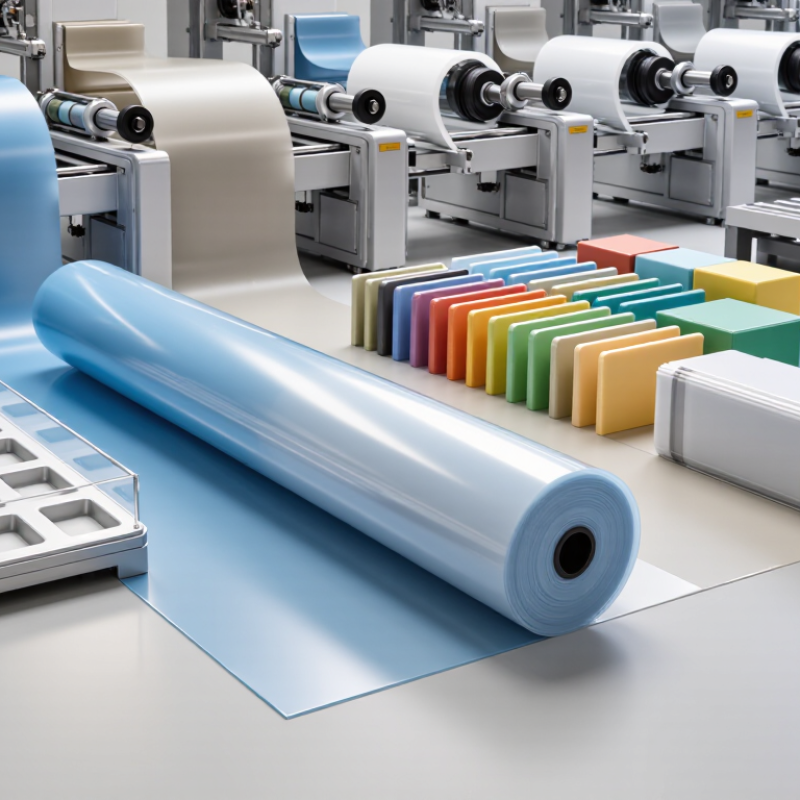
PS Sheet Roll Basics: Typical GPPS Density Is 1.04–1.06 g/cm³
Why Choose PS Sheet Roll for Packaging?
PS Sheet Roll Basics: Typical GPPS Density Is 1.04–1.06 g/cm³
GPPS, or general-purpose polystyrene, typically has a density of 1.04–1.06 g/cm³. This figure helps estimate material weight before a packaging run. For example, a wider or thicker roll will add weight quickly, even when the sheet looks light on the line. Density is useful, but it does not describe everything. It cannot confirm impact resistance, clarity, or forming performance by itself.
PS sheet roll can suit packaging that needs a smooth surface and consistent sheet feeding. Operators can check roll width, thickness, and edge condition before production. A small variation may affect trimming or create uneven trays. It happens. The right grade depends on the package design, forming temperature, and handling needs. Review supplier data and test a sample under actual process conditions rather than relying on density alone.
Tips: Use the density range for rough weight calculations, then verify the roll’s stated thickness and dimensions. Keep a sample from each delivery. Compare its appearance and forming behavior with your approved reference. That simple check can catch a mismatch early, though it is not a substitute for measured quality data.
Thermoforming Properties: GPPS Glass Transition Is Around 100°C
GPPS has a glass transition temperature of about 100°C, though the exact value varies by grade and test method. Near this point, the sheet shifts from a stiff, glassy state toward a softer, more flexible one. That change makes temperature control central to thermoforming PS sheet rolls for packaging.
A roll unwinds into the heating zone, where the sheet must warm evenly before forming over a mold. Reaching 100°C is not, by itself, a complete processing instruction. Forming conditions depend on sheet thickness, heater design, mold geometry, and line speed. Too little heat can leave corners thin or poorly defined. Too much can cause sagging or uneven walls. Small temperature differences matter.
The transition temperature is a useful reference, not a guaranteed machine setting. Operators typically assess the sheet’s response alongside process readings, then adjust the heating profile and forming time. A clear tray may look simple, yet its corners and rim reveal whether heat was distributed well. Still, the ideal window can be less tidy than a single number suggests. The selected GPPS grade and the actual production line both deserve a trial run.
Packaging Design: Match Sheet Gauge to Forming and Protection Needs
PS sheet roll gauge should be chosen for the finished package, not by comparing roll thickness alone. During thermoforming, deep draws can thin walls and corners, while sharp features may create weak spots. A shallow cover holding a light item may need less material than a deep tray carrying a dense product. Check the formed part’s thinnest areas, fit, and resistance to handling damage. Test the corners.
PlasticsEurope’s Plastics – the Fast Facts 2023 report states that packaging accounted for 39.8% of European plastics demand in 2022. That scale makes material choice significant, but the figure does not mean thinner is always better. A lighter gauge can lower material use, yet may flex, puncture, or lose shape during stacking. A thicker gauge can improve stiffness, but may need more heat and forming force. Trial samples help reveal the trade-off. Test loaded packs with relevant drop or compression methods, such as ASTM D5276 or ASTM D642, and inspect the actual formed thickness. One detail is easy to miss: a package can look sturdy on the machine and still fail after transport. Recheck it under realistic load and temperature conditions before fixing the gauge.
Performance Trade-Offs: Compare Clarity, Rigidity, and Impact Resistance
PS sheet roll is often chosen when packaging needs a clean, clear display and a firm shape. Through a transparent lid, customers can see a product’s color and surface without opening the pack. The material’s rigidity helps shallow trays and covers resist bending during handling. That matters on a crowded shelf. Clarity is useful, but it depends on sheet quality, thickness, and forming conditions; heat or stress can leave haze or uneven areas.
The trade-off is impact resistance. PS can perform well in ordinary handling, yet it is generally less forgiving of hard knocks than tougher plastics such as PET or PP. A thin corner may crack if a filled package is dropped onto a hard floor. Not always. Package geometry, wall thickness, and temperature all affect the result. For example, a rounded corner can distribute stress better than a sharp one, though it cannot remove the material’s limits. Compare sample rolls under realistic forming and handling conditions before choosing. One detail is easy to overlook: a very rigid pack may feel secure, but can transfer impact directly to the product inside. That deserves a test.
Why Choose PS Sheet Roll for Packaging?
Performance trade-offs: clarity, rigidity, and impact resistance
Clarity · Light transmittance (%)
Rigidity · Flexural modulus (GPa)
Impact · Notched Izod (J/m)
Representative values for clear GPPS, PET sheet, and clarified PP grades. PS offers high clarity and rigidity, but typically lower impact resistance than PET or PP. Actual properties vary by grade, thickness, processing, and test method; use supplier datasheets for material selection.
Material Identification: Polystyrene Uses Resin Identification Code #6
Why Choose PS Sheet Roll for Packaging?
On a PS sheet roll, Resin Identification Code #6 identifies polystyrene. ASTM D7611/D7611M specifies the resin identification coding system used to label plastic resins. The code helps identify material; it does not guarantee recyclability, recycled content, or acceptance by local collection services. Not a recycling promise. Buyers can request a material declaration and confirm whether the sheet is general-purpose polystyrene or high-impact polystyrene. Their clarity, toughness, and forming behavior can differ, affecting what a package can safely do.
The OECD’s 2022 Global Plastics Outlook estimated that 353 million tonnes of plastic waste were generated worldwide in 2019, with only 9% ultimately recycled. Those figures cover all plastics, not polystyrene alone. Still, they show why a resin code should not be mistaken for proof of recovery. Packaging teams can label specifications “PS, RIC #6,” separate clean production offcuts, and check whether a local processor accepts the specific sheet or packaging format. Even a tidy label can create false confidence; the collection route matters too.