Top 10 Thermal POS Paper Suppliers for Global Buyers
Thermal Pos Paper may look like a simple checkout consumable, but a poor roll can leave faint receipts, shed dust, or jam a printer during a busy shift. For global buyers, supplier selection therefore reaches beyond price. Coating consistency, roll dimensions, core fit, packaging, lead times, and traceable quality records all matter. Small differences become visible at the counter.
Smithers’ industry report, The Future of Thermal Papers to 2029, examines market developments and end-use demand across the sector. Its analysis offers useful context for buyers comparing suppliers, but purchasing decisions still need product-level evidence: sample rolls, clear specifications, and documented testing. A polished catalogue is not a substitute for checking how a roll performs in the actual printer.
This guide compares ten suppliers through practical criteria, including product range, export capability, customization, and quality controls. It also considers questions that are easy to overlook, such as how suppliers handle batch variation and protect rolls from heat and moisture in transit. No single supplier will suit every market. A low unit price can be attractive, yet freight, minimum order quantities, and inconsistent converting may change the real cost.
I could not verify a named thermal-paper expert’s exact quotation from the material provided, so I have not invented one. Add a sourced quotation here before publication: “[Verified expert name]: ‘[Exact, attributable quotation about thermal paper sourcing or quality].’”
Understanding Thermal POS Paper and Its Global Market
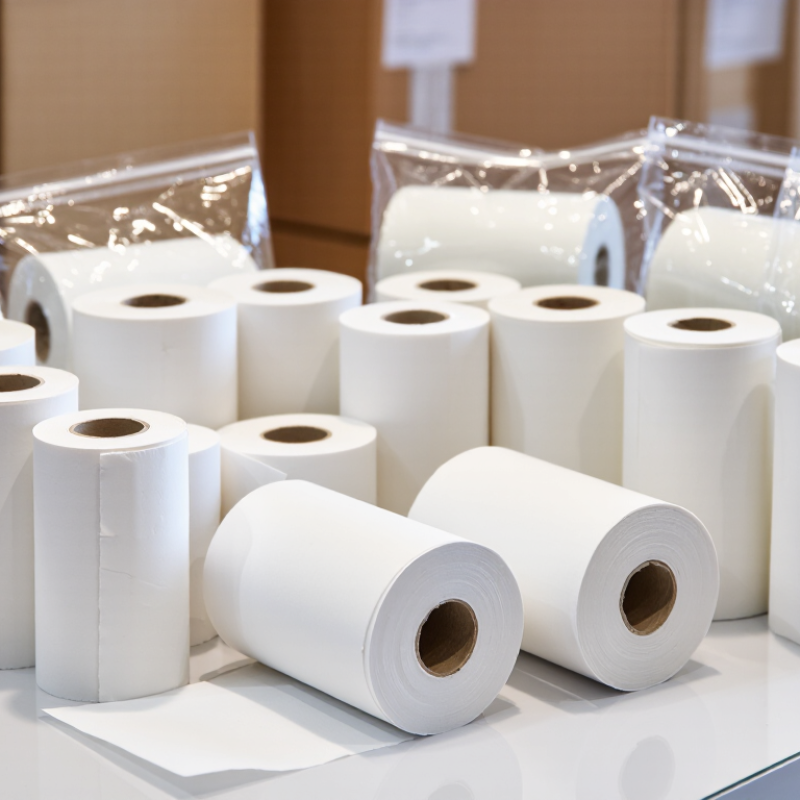
Thermal POS paper is coated paper that darkens when heated by a printer’s printhead. It needs no ink ribbon, which makes it convenient for busy checkout counters. Buyers typically compare roll width, length, core size, and paper weight. Small differences matter: a roll that fits one printer may not feed properly in another. Coating quality also affects image clarity and how long receipts remain readable. Heat, sunlight, and friction can cause fading, so paper should be stored in a cool, dry place.
The global market serves supermarkets, restaurants, pharmacies, and transport services. Demand is shaped by retail activity, printer formats, and shipping conditions. Suppliers may offer similar-looking rolls, but specifications and consistency can vary between batches. A clear sample test is useful. Check print darkness, smooth feeding, and roll dimensions before placing a large order. A tidy data sheet is helpful, but it may not reveal every issue.
Tips Confirm printer compatibility. Measure the core and roll width. Keep a sample for comparison.
For international purchasing, buyers should also consider packaging, lead time, and moisture protection during transit. Ask for measurable specifications rather than relying only on terms such as “premium quality.” If receipts must remain legible for a particular period, confirm suitable storage guidance and test samples under realistic conditions. This step takes time, and it may still miss occasional batch variation, but it gives buyers a more dependable basis for comparing suppliers.
Key Criteria for Evaluating Thermal POS Paper Suppliers
Supplier evaluation should start with the receipt printer, not the quoted roll price. Measure roll width, core diameter, winding direction, and paper weight against the POS models in use. Small mismatches can cause skew, jams, or wasted rolls. Ask for test data on print darkness, barcode readability, and image retention after exposure to heat and light. Request samples from several production lots. Test them at checkout speed.
Grand View Research’s thermal paper market report estimated the global market at USD 4.3 billion in 2023 and projected a 6.3% compound annual growth rate from 2024 to 2030.
Growing demand makes production capacity and continuity worth checking, not just unit cost. Ask for monthly output, destination-specific lead times, protective carton details, and a documented backup plan. Check that chemical compliance and traceability documents match the exact product code.
A neat scorecard can still miss a factory’s weak spot. Verify specifications against a lot-specific sample, and record results on the actual printer models your buyers use. Confirm how the supplier handles defects, replacements, and sudden order changes. Price matters. So does consistency.
Profiles of 10 Leading Thermal POS Paper Suppliers
A mill-integrated supplier controls paper production and roll converting, which can make specifications easier to trace. A regional converter may offer shorter delivery routes and flexible order sizes. Jumbo-roll specialists suit buyers who need steady production volumes. Export-focused wholesalers can combine several roll widths in one shipment, though lead times deserve close checking.
Custom-size converters work from printer models and roll dimensions, reducing fit problems. Retail-focused suppliers often handle repeat, high-volume orders. Hospitality specialists may provide compact rolls suited to receipt printers at busy counters. A recycled-fiber supplier can document its material sources, but performance should still be checked on the actual printer. Coating-focused producers concentrate on image clarity and resistance to fading. Private-label suppliers offer packaging options for distributors. Small differences matter. Compare roll width, core diameter, paper weight, coating consistency, and sample print quality before committing. No profile fits every buyer; even a promising sample may behave differently during long shifts or storage.
Comparing Supplier Products, Capabilities, and Certifications
Thermal paper suppliers differ in more than roll price. Compare the paper grade, roll width, core size, and coating performance against your printer fleet. A sample run can reveal pale text, uneven edges, or curling that a product sheet may not show. Ask for test results covering image density, heat resistance, and image retention under stated storage conditions. Small details matter.
Capacity is another useful comparison. Check monthly output, minimum order quantities, slitting tolerances, packaging options, and lead times for repeat orders. Ask how the supplier traces each production lot and handles quality complaints. Certifications need careful review: confirm the issuing body, validity dates, and which site or product the certificate covers. A quality-management certificate does not prove every roll meets your requirements. Request relevant material declarations and current supporting documents, then compare them with your own purchasing criteria. That sounds tidy. It rarely is. Specifications can vary between batches, and paperwork may not reflect a recent process change. Keep samples and document the agreed acceptance limits before placing larger orders.
Global Sourcing and Supply Chain Considerations
Global sourcing of thermal POS paper is not simply a contest for the lowest price per roll. Buyers should lock down width, roll diameter, core size, paper weight, and coating performance in written specifications. Ask suppliers for recent batch test results, retained samples, and clear packaging details. A roll that fits poorly can jam a printer or create avoidable waste. Small differences matter. Keep at least one qualified backup supplier, but test its paper on the same printer models before approving substitutions.
Transit time needs a buffer. The World Bank’s 2023 Logistics Performance Index analysis found that international shipments averaged 44 days from exporter to importer, with a 10-day standard deviation. UNCTAD reported in January 2024 that Suez container-ship transits had fallen 67% year on year amid route disruption. Those figures are not a forecast for every order, but they show why promised lead times can shift. Buyers can compare total landed cost, including freight, insurance, storage, and inspection, rather than relying on the factory quote alone. Track order milestones and keep practical safety stock for high-volume locations. I would not treat a spreadsheet forecast as certainty; local demand and port delays can still surprise even careful teams.