
China Top 10 Rotary Pouch Packing Machine Suppliers?
Choosing a reliable rotary pouch packing machine supplier in China requires more than comparing prices. A machine may look impressive in a showroom, yet struggle with powder dust, uneven pouch film, or frequent format changes on a busy factory floor. This guide introduces ten leading Chinese suppliers and examines their equipment from a practical purchasing perspective.
The comparison considers sealing consistency, filling accuracy, machine speed, pouch compatibility, automation options, after-sales support, spare-parts availability, and export experience. It also considers less visible details, including cleaning access, electrical quality, software usability, and response time when production stops. These details matter.
Packaging automation specialist Jorge Izquierdo has shared a useful principle: “Automation should solve a real production problem, not simply add technology.” That idea fits the rotary pouch packing machine market especially well. Higher speed is not always better. A machine running at 80 bags per minute may be more valuable than one rated at 120 if it creates fewer rejects and requires less maintenance.
The suppliers listed here serve food, beverage, chemical, pharmaceutical, and household-product manufacturers. Their strengths are not identical. Some focus on compact machines, while others provide complete weighing, filling, nitrogen-flushing, and cartoning lines. Supplier rankings can change as technology, service teams, and customer feedback develop. This list is therefore a practical starting point, not a permanent verdict.
Factory visits, sample testing, and reference checks remain essential. Ask suppliers to run your actual product. Watch the seals. Inspect the rejected pouches. A careful decision today can prevent expensive downtime later.
What Is a Rotary Pouch Packing Machine?
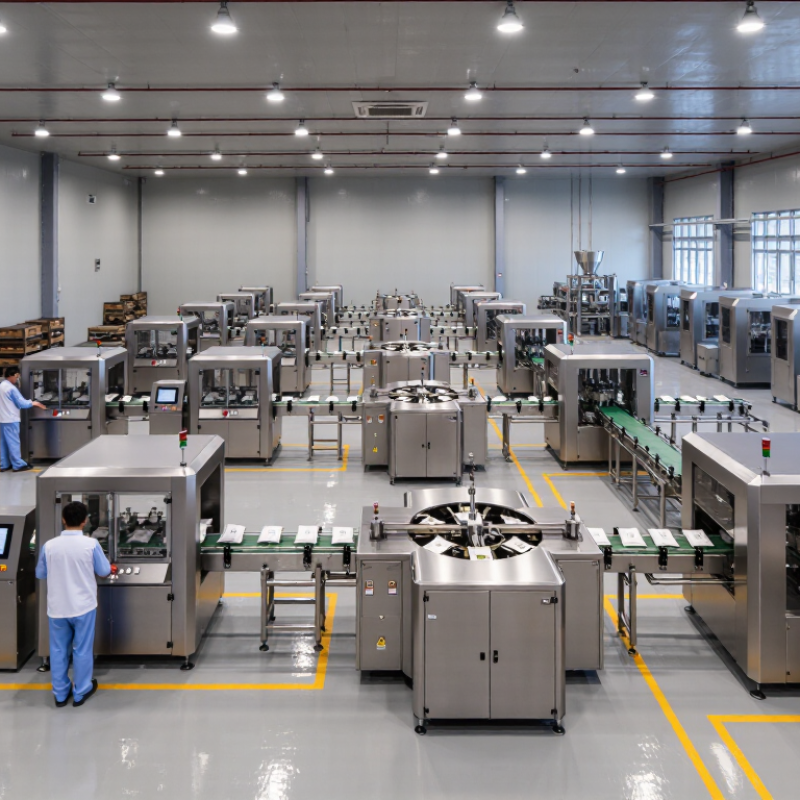
A rotary pouch packing machine is an automated system that moves pre-made pouches through several circular stations. Each station performs one controlled task, such as pouch feeding, opening, product filling, sealing, and discharge. The rotary layout keeps movements compact and consistent. It also supports multiple pouch sizes with suitable change parts.
In practical production, operators watch pouch alignment, seal temperature, filling accuracy, and air pressure. A small setting error can create weak seals or uneven weights. According to PMMI packaging industry reports, labor shortages and automation investment remain important production concerns. This explains why rotary systems are increasingly used for repeatable packing work. However, automation does not remove inspection duties. It changes them.
Smithers’ flexible packaging market research projects continued global growth through 2028, supported by lightweight materials and convenient formats. That trend increases demand for reliable pouch handling. Many rotary machines can reach dozens of cycles per minute, depending on pouch size, product behavior, and sealing time. Powder, granules, liquids, and irregular pieces each require different filling methods. A machine that performs well with dry snacks may struggle with sticky products. Reality is less tidy than a brochure suggests. Energy use, cleaning access, spare parts, and operator training should be checked beside speed. A slower machine with stable seals may deliver better output than a faster machine with frequent stoppages.
How to Evaluate Chinese Rotary Pouch Packing Machine Suppliers
China Top 10 Rotary Pouch Packing Machine Suppliers?
How to Evaluate Chinese Rotary Pouch Packing Machine Suppliers
A serious evaluation starts with the machine, not the sales brochure. Check the supplier’s manufacturing experience, engineering team, and documented quality procedures. Ask for drawings, electrical layouts, component lists, and a clear warranty. Reliable suppliers explain limitations instead of promising maximum speed for every product.
Request a live test using your actual materials. Observe pouch alignment, filling accuracy, sealing pressure, and film tracking. Record output during a continuous eight-hour trial.
Small details matter, such as clean cable routing and easy access to heaters. A machine rated at 60 pouches per minute may produce less after frequent size changes. Brochures often hide that gap.
Factory audits can reveal practical evidence. Look for calibration records, spare-parts storage, inspection stations, and trained technicians. Review installation plans, training schedules, and response times for technical support. Ask for references from users with similar pouch sizes and production conditions. Video demonstrations help, but an in-person inspection is stronger evidence.
Do not ignore after-sales communication. Slow replies today may become expensive downtime later. Compare the total cost, including tooling, shipping, commissioning, maintenance, and operator training. I would also ask for a written acceptance standard. It prevents arguments when the machine arrives. Some suppliers appear polished online but provide weak documentation. That deserves careful reflection.
Top 10 Rotary Pouch Packing Machine Suppliers in China
China’s top ten rotary pouch packing machine suppliers usually serve food, household, and personal care manufacturers. Their equipment commonly uses eight, ten, or twelve rotary stations. Servo-driven filling systems can improve accuracy for powders, granules, liquids, and prepared products. However, performance depends heavily on product behavior and pouch material.
Reliable suppliers should provide clear machine drawings, factory test records, and documented quality controls. Buyers should inspect stainless-steel contact parts, sealing temperature stability, filling accuracy, and emergency protection. A practical factory visit may reveal details that brochures omit, such as cable routing, cleaning access, and spare-parts storage. Ask for a sample test using your own pouch film. It matters.
Experienced suppliers also support installation, operator training, preventive maintenance, and remote troubleshooting. Check whether they can provide electrical documentation and replacement parts for several years. Independent customer references are useful, especially from plants with similar production speeds. A machine rated at 60 bags per minute may run slower with sticky products or unusual pouch shapes. This is often ignored.
No supplier is perfect. Some quotations look attractive but exclude feeding systems, coding units, or commissioning costs. Others offer excellent hardware but slow technical communication. A careful comparison should include total ownership cost, delivery terms, warranty response, and testing standards. The strongest candidates among China’s top ten suppliers are those that explain limitations clearly, measure results honestly, and adapt the machine to real production conditions.
China Top 10 Rotary Pouch Packing Machine Suppliers — Market Specification Benchmark
Representative technical benchmarks commonly published for Chinese rotary pouch packing machines. The figures are industry-level references and do not represent any individual company or brand.
Typical reference values: rotary machines commonly use 6–10 stations, reach approximately 40–80 bags per minute, support pouch widths up to about 210 mm, and achieve filling accuracy of around ±1% depending on the product and dosing system.
Key Products, Industries, and Customization Options
China’s top 10 rotary pouch packing machine suppliers usually compete through product range, industry fit, and engineering support. Typical machines handle premade flat pouches, stand-up pouches, zipper bags, vacuum packs, and spouted formats. They may integrate auger fillers, multihead weighers, liquid pumps, nitrogen flushing, date coding, and checkweighing systems.
Food remains the largest application. Pet food, snacks, sauces, coffee, cosmetics, and household products also need different dosing accuracy and sealing controls. Grand View Research valued the global flexible packaging market at about USD 268 billion in 2023. Its forecast suggests continued growth through 2030. That expansion increases demand for compact, servo-driven equipment with shorter changeover times.
Customization matters more than catalogue speed. Buyers should confirm pouch width, filling volume, film structure, sealing temperature, and target output using real samples. A practical factory test can reveal dust leakage, unstable seals, or awkward cleaning points. These details are often missed. Options may include ten-station rotary layouts, quick-change tooling, washdown frames, recipe storage, vision inspection, and remote diagnostics. PMMI industry research continues to identify food and beverage as major packaging machinery users. Still, published capacity figures are not always comparable. Ask for verified cycle tests, energy data, spare-parts lead times, and documented acceptance standards before selecting a supplier.
How to Select the Right Supplier for Your Business
China Top 10 Rotary Pouch Packing Machine Suppliers: How to Select the Right Supplier for Your Business
Choosing among China’s top ten rotary pouch packing machine suppliers requires more than comparing prices. Your product, pouch size, filling method, and factory layout should guide the decision. A machine handling powder may need different auger control than one packing liquid or granules. Ask each supplier to run your actual material in a recorded factory test. Request pouch samples, sealing photographs, speed data, and waste figures.
Check the machine’s working details carefully. Servo-driven systems can improve positioning, but performance still depends on software tuning and operator training. Confirm the number of stations, compatible pouch widths, changeover time, filling accuracy, and cleaning access. Review electrical components, safety guards, spare-part availability, and remote support. A clear warranty matters. So does response time.
I have seen buyers focus on hourly output and overlook maintenance space. That mistake becomes expensive. Ask for a complete layout, utility requirements, and a list of wearing parts. Evaluate the supplier’s engineering records, export experience, inspection process, and after-sales team. Independent factory audits can reveal assembly quality and testing habits. Avoid accepting polished claims without evidence. In practice, even a strong supplier may need adjustments for unusual materials, weak films, or frequent product changes. Leave room for trials, training, and honest technical discussion before signing.
China Top 10 Rotary Pouch Packing Machine Suppliers? - How to Select the Right Supplier for Your Business
| No. | Evaluation Dimension | What to Verify | Practical Reference Benchmark | Recommended Evidence | Weight |
|---|---|---|---|---|---|
| 1 | Machine Compatibility | Confirm compatibility with pouch types, dimensions, filling materials, sealing structures, and product characteristics. | The supplier should provide a written specification covering pouch width, pouch length, fill volume, product density, and sealing temperature range. | Approved sample pouches, material test report, and application-specific configuration sheet. | 15% |
| 2 | Rated Production Capacity | Compare the number of working stations, filling method, product characteristics, and actual output rather than relying only on theoretical speed. | Request a factory acceptance test using the buyer’s product and packaging materials. Record packs per minute, stoppages, and reject rate. | Signed test protocol, production video under comparable conditions, and output guarantee. | 14% |
| 3 | Filling Accuracy | Evaluate the dosing system according to the product: volumetric, auger, piston, cup, multihead, or liquid pump filling. | Accuracy must be defined for the specific product and target weight; a common procurement target is a documented average deviation of approximately ±1% to ±2%, subject to product characteristics. | Statistical weight records from multiple production runs and calibrated scale certificates. | 13% |
| 4 | Sealing Quality | Check seal strength, seal appearance, contamination tolerance, temperature control, and compatibility with laminated films. | Seals should be continuous, wrinkle-free, and free from product contamination during the agreed test run. The required seal strength should be specified by the packaging material supplier. | Peel or tensile test results, leak test records, and sample inspection checklist. | 12% |
| 5 | Automation and Controls | Review PLC, HMI language, servo control, recipe management, alarm records, sensor layout, and data connectivity. | The machine should support password-protected settings, stored recipes, fault diagnostics, emergency stops, and clear operator instructions. | Control-system architecture, HMI screenshots, electrical schematics, and user manual. | 10% |
| 6 | Hygienic and Safety Design | Assess stainless-steel contact parts, cleanability, guarding, interlocks, accessibility, and suitability for food or pharmaceutical environments. | Product-contact areas should be cleanable and corrosion-resistant; safety guarding and emergency-stop functions should be demonstrated before acceptance. | Material declaration, risk assessment, sanitation procedure, and safety inspection report. | 10% |
| 7 | Compliance Documentation | Verify the documents required for the destination market, including electrical safety, machinery safety, electromagnetic compatibility, and food-contact requirements where applicable. | Certificates and declarations must match the exact machine model, configuration, and destination-market requirements; generic certificates should not be accepted without verification. | Declaration of conformity, test reports, wiring diagrams, and applicable material declarations. | 9% |
| 8 | After-Sales Support | Evaluate commissioning, operator training, remote troubleshooting, field service, response times, and spare-parts availability. | A formal service-level agreement should define response time, technical support channels, warranty coverage, and escalation procedures. | Service agreement, training plan, spare-parts list, and support contact details. | 7% |
| 9 | Total Cost of Ownership | Calculate purchase price together with tooling, installation, utilities, packaging waste, maintenance, spare parts, labor, and downtime. | Compare at least a three- to five-year ownership model instead of evaluating only the initial quotation. | Itemized quotation, utility-consumption data, maintenance schedule, and spare-parts pricing. | 5% |
| 10 | Delivery and Project Execution | Review engineering approval, manufacturing lead time, inspection milestones, packaging, shipping terms, installation, and acceptance criteria. | The contract should include approved drawings, milestone dates, factory acceptance testing, site acceptance testing, and remedies for missed requirements. | Project schedule, inspection plan, packing list, acceptance protocol, and clearly defined Incoterms. | 5% |
| Total Recommended Evaluation Weight | 100% | ||||
