
Top 10 Types of Polyprop Bags for Global Buyers
Choosing the right Polyprop Bags can influence product protection, warehouse efficiency, and total shipping costs. Global buyers often compare strength, capacity, closure style, printing quality, and end-use requirements before placing an order. This guide introduces the top 10 types used across agriculture, construction, food packaging, chemicals, recycling, and general merchandise. Each type serves a different purpose. Small details matter.
From woven polypropylene sacks to laminated bags, valve bags, and bulk FIBCs, construction affects performance. A coated surface can improve moisture resistance, while a breathable weave may suit products needing ventilation. Buyers should also examine fabric denier, seam quality, load capacity, liner options, and pallet compatibility. Clear specifications reduce misunderstandings between suppliers and purchasing teams. Product samples remain valuable. Photos alone can mislead.
Reliable sourcing requires more than selecting the lowest quotation. Experienced buyers usually verify factory capabilities, quality-control procedures, packaging conditions, and test documentation. They also confirm printing accuracy, dimensions, tolerances, and consistent production across batches. No single bag wins every application. Even experienced professionals can overlook handling conditions or seasonal storage risks. That deserves reflection.
This overview is designed to support practical comparisons, not replace technical assessment. The most suitable Polyprop Bags depend on the product, filling process, transport route, and destination requirements. Buyers should consult qualified packaging specialists when specifications are complex. Careful evaluation creates fewer surprises, steadier operations, and better long-term value. That is the real objective.
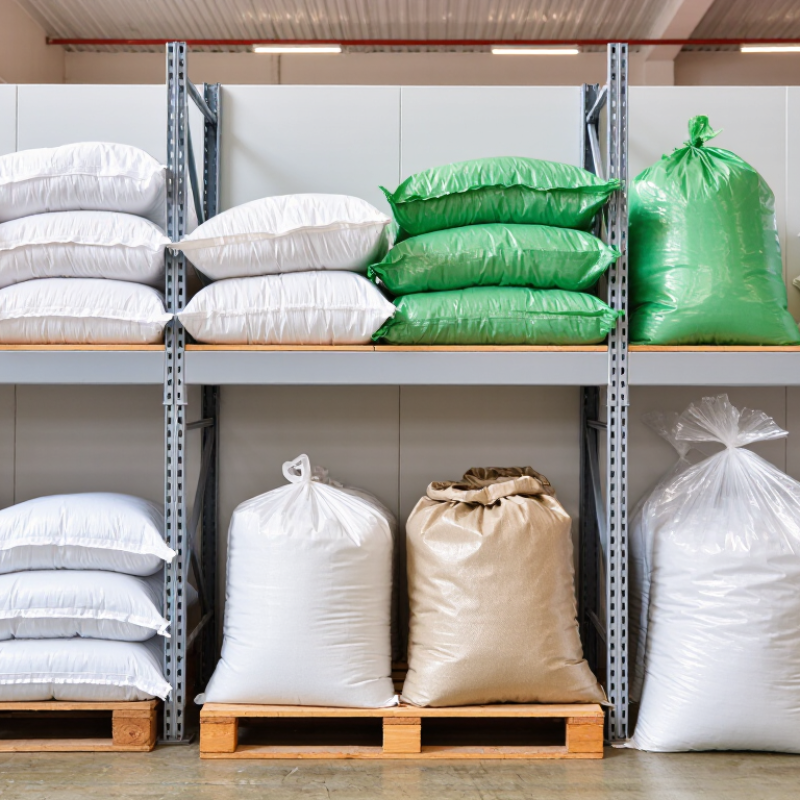
Polypropylene Bags: Materials, Construction, and Core Performance Features
Polypropylene bags serve very different jobs, although they often look similar on a warehouse floor. Woven sacks use laminated or unlaminated PP tapes, while valve sacks, block-bottom bags, and FIBC containers use distinct seam patterns and load paths. PP has a low density of about 0.90–0.91 g/cm³ and melts near 160–165°C. This helps reduce transport weight, but heat exposure can still weaken fabric.
Construction controls performance. Tape denier, weave density, coating thickness, gusset design, and stitching determine tensile strength, moisture resistance, and filling speed. Tubular woven bags distribute stress efficiently around bulk materials. Flat woven bags usually offer simpler conversion and lower production complexity. FIBCs require careful lifting-loop design and testing under ISO 21898. Small details matter. A poorly aligned seam can fail before the fabric does.
Smithers’ The Future of Flexible Packaging to 2028 values the global flexible-packaging market at roughly US$200 billion in 2023, showing the scale of demand for lightweight packaging systems. The OECD Global Plastics Outlook reports that global plastics production reached 460 million tonnes in 2019. These figures explain the pressure to improve material efficiency and recovery. However, choosing the thinnest bag is not always responsible. Recycled PP may alter stiffness, odor, or weld consistency. Performance claims should follow actual drop, compression, and moisture tests. A specification without test evidence is only an assumption.
Woven Polypropylene Bags for Bulk Commodities and Industrial Products
Top 10 Types of Polyprop Bags for Global Buyers
Woven polypropylene bags protect bulk commodities during storage, handling, and ocean transport. Their strength comes from interlaced tapes, not woven fabric alone. Standard open-mouth bags suit rice, grain, seed, and animal feed. Valve bags support faster filling for cement, minerals, and powdered materials.
Block-bottom bags stand upright on pallets. Gusseted bags create extra volume without wasting warehouse space. Laminated bags add a smoother print surface and better moisture resistance.
Coated bags perform well where humidity is a concern. Ventilated bags allow airflow around agricultural products and reduce heat buildup. Anti-static bags help control static during industrial filling operations. Heavy-duty multi-wall bags handle rough loading conditions.
Flexible intermediate bulk containers, often called FIBCs, carry larger volumes of granules, powders, and processed commodities. Each type needs a suitable fabric weight, seam design, and filling method.
In practical sourcing, buyers should request samples before approving production. Check seam strength, bag dimensions, coating adhesion, and safe working load.
A 25-kilogram bag may need different construction than a 1,000-kilogram bulk container. Food-contact applications also require verified material documentation and controlled manufacturing records.
Do not trust appearance alone. A bright surface can hide weak stitching. We have seen packaging fail when pallet corners caused abrasion. The design was acceptable, but the handling process was not. Small details matter.
Laminated, Printed, and BOPP Polypropylene Bags for Retail Packaging
Top 10 Types of Polyprop Bags for Global Buyers
Laminated, printed, and BOPP polypropylene bags remain practical choices for retail packaging. They combine low weight, strong seams, and clear product presentation. Common formats include woven sacks, valve bags, block-bottom bags, flat bags, gusseted bags, and shopping bags. BOPP film adds sharp graphics and improved scuff resistance. Lamination can also improve moisture and oxygen protection, depending on the structure and seal design.
The OECD Global Plastics Outlook reports that packaging represents about 40% of global plastic demand. That figure makes material efficiency important, not optional. Buyers should compare bag weight, filling speed, pallet stability, and transport damage together. Printed bags need ink-rub testing, color checks, and barcode trials under store lighting. A beautiful surface is not enough. In my experience, weak gussets often create more trouble than poor printing. This is easy to overlook.
Tips: Request production samples before approving a large order. Test filled bags during stacking, vibration, and humidity exposure. Confirm film thickness, seam strength, printing tolerance, and food-contact documentation where relevant. BOPP bags may perform well, but multilayer structures can complicate recycling. That deserves honest review. The UNEP 2023 report also encourages packaging reduction, reuse, and better material design. Buyers should therefore select only the protection and decoration the product genuinely needs.
Specialized Polypropylene Bags for Agriculture, Chemicals, and Food Products
Top 10 Types of Polyprop Bags for Global Buyers
Specialized polypropylene bags support agriculture, chemicals, and food products. The right structure protects contents from moisture, dust, impact, and handling stress. Common options include woven PP sacks, laminated sacks, BOPP bags, gusseted bags, valve bags, open-mouth bags, FIBC bulk bags, liner bags, breathable mesh bags, and anti-static bags.
Agricultural buyers often choose woven sacks for grain, seed, animal feed, and fertilizer. Laminated surfaces improve moisture resistance during humid storage. FAO reported that 13.2% of food was lost between harvest and retail in 2021. Better closure and stacking can reduce avoidable damage, although packaging cannot solve poor warehousing. For chemicals, FIBC bags and valve sacks provide efficient filling and controlled discharge. Anti-static or conductive designs may be necessary around sensitive powders. Always confirm material compatibility and required certification before shipment.
Food applications need stricter control. A food-contact compliant inner liner can protect flour, sugar, rice, and other dry products. BOPP lamination supports clear printing and stronger abrasion resistance. Tips: ask for migration test records, seam-strength results, UV-resistance data, and liner specifications. Check whether the bag survives pallet compression and container humidity. The OECD estimated that global plastic waste reached 353 million tonnes in 2019, so lightweighting should be balanced with reuse, recyclability, and product protection. Smaller bags sometimes use less plastic overall. Not always. Testing should decide.
Selection Criteria: Capacity, Closures, Compliance, and Global Shipping Needs
Polypropylene bags differ more by construction than appearance. The ten useful formats include open-mouth sacks, valve sacks, gusseted sacks, block-bottom sacks, laminated woven bags, unlaminated woven bags, BOPP-laminated bags, drawstring bags, liner-inserted bags, and FIBCs. Choose 5–25 kg formats for retail or smaller industrial loads. Select FIBCs for roughly 500–2,000 kg, subject to tested safe working limits. ISO 21898 provides guidance for flexible intermediate bulk containers. Capacity is only the starting point.
Closures should match handling conditions. Sewn tops suit general cargo, while valve closures improve automated filling. Liners help control moisture, but they may increase packing volume. Check seam strength, drop resistance, pallet stability, and stacking height before approval. Compliance also needs destination-specific testing for food contact, chemical migration, labeling, and recycled content. The OECD Global Plastics Outlook reports that global plastics production reached 460 million tonnes in 2019, while only 9% was recycled. Material declarations and traceability therefore matter more than attractive claims. A clean specification can still fail in practice.
Shipping changes the decision again. UNCTAD’s Review of Maritime Transport states that over 80% of global merchandise trade by volume moves by sea. Bags should resist humidity, compression, container movement, and repeated handling. Compact block-bottom designs may improve pallet use, but heavier construction can reduce container efficiency. Buyers often overlook this trade-off. Request trial packing, loading photographs, test reports, and independent inspection records before placing a large order.
Top 10 Types of Polyprop Bags for Global Buyers - Selection Criteria: Capacity, Closures, Compliance, and Global Shipping Needs
| No. | Polypropylene Bag Type | Typical Capacity | Common Closure Options | Suitable Contents and Applications | Compliance and Technical Considerations | Global Shipping and Buying Considerations |
|---|---|---|---|---|---|---|
| 1 | Standard Woven PP Sack | 5–50 kg | Open mouth, stitched hem, sewn top, or heat-cut top | Rice, flour, sugar, animal feed, fertilizer, grains, and industrial powders | Specify fabric denier, coating, seam strength, UV stabilization, and food-contact suitability where required. | Lightweight and stackable; confirm pallet pattern, bale dimensions, container loading quantity, and moisture protection for ocean transport. |
| 2 | PP Woven Sack with PE Lamination | 10–50 kg | Stitched top, heat-sealed top, or sewn closure with liner | Powders, minerals, cement-based products, pet food, chemicals, and moisture-sensitive commodities | Use a suitable polyethylene coating or liner for improved moisture resistance; verify migration and food-contact requirements for edible products. | Better protection against humidity during multimodal shipping; added lamination increases weight, material usage, and recycling considerations. |
| 3 | BOPP Laminated Printed Bag | 5–50 kg | Open mouth, sewn top, block-bottom, or valve closure | Retail grains, pet food, lawn products, fertilizer, and branded-looking consumer packaging without identifying a supplier | Check print-ink suitability, color migration, abrasion resistance, laminate integrity, and applicable packaging or food-contact rules. | High-quality graphics can support retail presentation; request print proofs, color tolerances, barcode readability, and export carton or bale specifications. |
| 4 | Valve-Type PP Bag | 10–50 kg | Internal or external filling valve; self-closing or heat-sealed valve | Cement, mortar, gypsum, dry chemicals, flour, and other free-flowing powders | Specify valve dimensions, filling-machine compatibility, dust control, seam strength, and product-contact requirements. | Efficient automated filling and clean stacking; test the valve with the intended filling equipment before approving mass production. |
| 5 | Block-Bottom PP Bag | 10–50 kg | Top valve, sewn top, or heat-sealed top | Cement, building materials, agricultural products, pet food, and powdered goods | Evaluate dimensional stability, bottom construction, drop strength, seam performance, and dust-tightness. | Square shape improves pallet utilization and warehouse stability; confirm pallet height, stretch-wrap compatibility, and container cubic efficiency. |
| 6 | Gusseted Woven PP Bag | 10–50 kg | Open mouth, sewn top, drawstring, or liner-assisted closure | Pet food, feed, seeds, grains, chemicals, and products requiring increased volume | Define gusset width, filled dimensions, load-bearing seams, liner fit, and resistance to puncture and abrasion. | More usable volume than a flat sack of similar width; obtain filled-bag dimensions for accurate pallet and container planning. |
| 7 | PP Mesh or Raschel Bag | 2–25 kg | Drawstring, sewn top, tape closure, or stitched hem | Potatoes, onions, citrus fruit, firewood, shellfish, and other ventilated products | Specify mesh opening, UV resistance, food-contact suitability, tensile strength, and ventilation requirements. | Excellent airflow and low tare weight; not suitable for fine powders or products needing a moisture barrier unless combined with an inner liner. |
| 8 | PP Leno Bag | 5–50 kg | Drawstring, sewn top, clipped top, or stitched closure | Fresh produce, vegetables, firewood, seafood, and agricultural commodities | Confirm mesh construction, food-contact requirements, UV stabilization, handle strength, and ventilation performance. | Low-cost ventilation packaging for export produce; use ventilation-friendly pallets and protect loads from crushing and excessive condensation. |
| 9 | FIBC Bulk Bag | 500–2,000 kg | Top fill spout, duffle top, skirt top, bottom discharge spout, or plain bottom | Resins, minerals, grains, fertilizer, chemicals, food ingredients, and waste materials | Specify safe working load, safety factor, lifting-loop design, fabric coating, liner, antistatic classification, and UN performance requirements when applicable. | Designed for forklift or crane handling; confirm filled dimensions, stacking limits, lifting method, container utilization, and handling instructions. |
| 10 | Conductive or Antistatic FIBC | 500–2,000 kg | Top fill spout, discharge spout, duffle top, or sealed liner system | Flammable powders, combustible dust environments, sensitive chemicals, and selected pharmaceutical materials | Requires specialist review Confirm the appropriate FIBC type, grounding method, surface resistance, liner design, hazardous-area controls, and applicable testing standards. | Grounding procedures and trained handling are essential; shipping documents should clearly state handling, storage, and static-control requirements. |
