What is Print Inspection and Why is it Important?
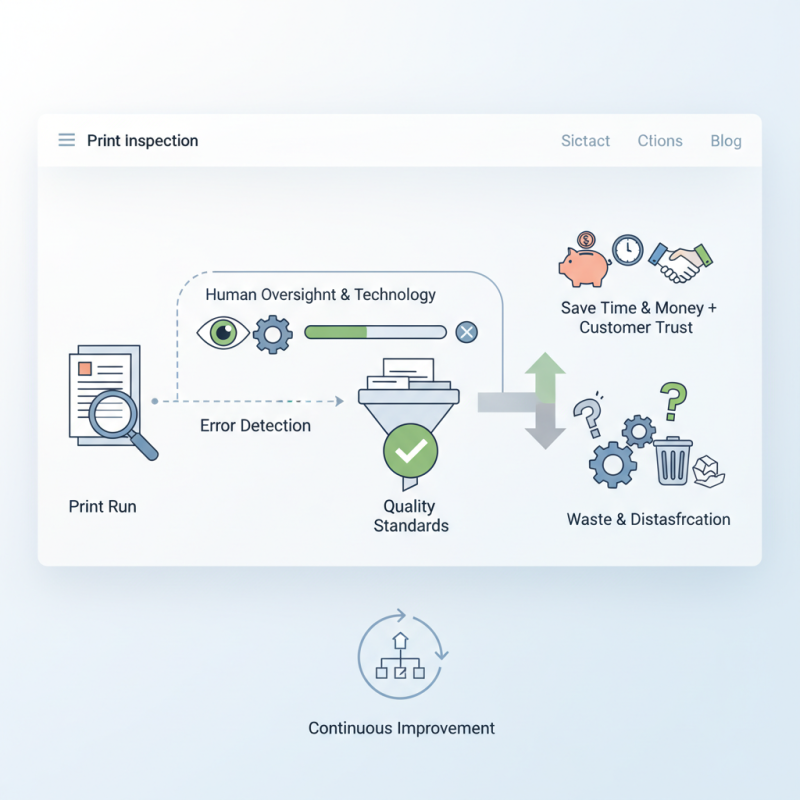
Print Inspection plays a critical role in the printing industry. It ensures that the final output meets quality standards. According to John Smith, a leading expert in print quality management, “Effective Print Inspection can save companies both time and money.” This highlights its importance in maintaining high-quality standards.
Every print run carries the risk of errors. Even experienced operators face challenges in detecting flaws. A missed imperfection can lead to waste and customer dissatisfaction. The process of Print Inspection helps minimize these issues by identifying defects early. This proactive approach results in better products and enhances customer trust.
However, Print Inspection is not flawless. While technology aids in error detection, human oversight is still essential. Many printing companies struggle to adapt fully to automated systems. There can be gaps in training and implementation. Reflecting on these shortcomings is important for ongoing improvement in the industry.
Understanding Print Inspection: Definition and Purpose
Print inspection is a critical process in the printing industry. It involves checking printed materials for quality and accuracy. This examination ensures that the final product meets specific standards. Attention to detail during print inspection can prevent costly errors. Missing a flaw can lead to wasted resources and downtime.
Understanding the purpose of print inspection is vital. It helps maintain brand integrity and customer satisfaction. For example, a misaligned label can ruin a product's appeal. Inspecting prints for color consistency and clarity is essential. However, this process is often rushed. Teams may overlook defects in their haste. Regular training and vigilance can address these challenges.
Another aspect to consider is the technology used in print inspection. While automation can enhance efficiency, human oversight remains crucial. Machines may not catch every nuance. Thus, a balanced approach combining both is important. Striving for perfection in print results can seem overwhelming, but small improvements can lead to significant changes.
The Role of Print Inspection in Quality Control Processes
Print inspection is a crucial step in quality control processes across various industries. It involves examining printed materials to ensure they meet specific standards. This not only includes checking for color accuracy but also for clarity and proper alignment. Errors in printing can lead to significant financial losses and damage brand reputation.
In this process, quality control teams assess printed products meticulously. They look for common issues like smudges, misprints, or color discrepancies. It may seem tedious, but each inspection can reveal insights into the printing process. For instance, a recurring misalignment could hint at machine calibration issues. Ignoring such signs can result in larger problems down the line.
Moreover, the integration of technology in print inspection adds another layer. Automated systems can detect imperfections faster than the human eye. Yet, relying solely on technology might overlook some nuanced errors. Therefore, a balance between machine efficiency and human oversight is essential. Quality control in print is not just about catching mistakes; it's about improving processes continuously.
Key Technologies Used in Print Inspection Systems
Print inspection is crucial for maintaining quality in printed materials. With various technologies available, it has become easier to identify defects and ensure consistency. Key technologies in print inspection systems include machine vision, optical character recognition, and spectral analysis. These tools work together to monitor print quality in real-time.
Machine vision systems use high-resolution cameras to capture images of printed materials. They analyze these images for color accuracy and alignment. Optical character recognition (OCR) helps verify text and codes on packaging. This ensures that vital information is correct and easily readable. Spectral analysis evaluates printed colors against predefined standards. It's efficient for detecting subtle variations that may escape the eye.
However, the implementation of these technologies is not without challenges. Calibration issues can arise, affecting accuracy. Sometimes, environmental factors introduce noise into the data, complicating analysis. Not every defect is easily detectable, even with advanced systems. Continuous improvement and regular training are necessary to enhance the effectiveness of print inspection processes.
Benefits of Print Inspection for Businesses and Consumers
Print inspection is a crucial process in the printing industry. It ensures that printed materials meet quality standards. For businesses, it reduces waste and saves costs. When errors are caught early, less material is used unnecessarily. This is vital for companies aiming to maintain a good reputation.
Consumers greatly benefit as well. High-quality printed products enhance customer experience. Flimsy prints can lead to dissatisfaction. Quality control can prevent this issue. When print inspection is conducted effectively, consumers receive products that look and feel professional. But it’s not always perfect; mistakes can still slip through. This highlights the need for continuous improvement in inspection processes.
Ultimately, print inspection helps in minimizing errors. It builds trust between brands and customers. Everyone deserves to receive what they paid for—a product that meets their expectations. Companies should always be ready to reflect on their processes to ensure improvement. A commitment to quality will ensure a better outcome for all involved.
Common Challenges Faced in Print Inspection Practices
Print inspection plays a crucial role in maintaining quality across various industries. However, several challenges hinder effective practices. One common issue is the inconsistent quality of printed materials. This can lead to miscommunication with customers and potential loss of credibility. It’s important to establish a reliable quality control process to address this problem.
Another challenge is the rapid pace of production. Many businesses prioritize speed over thorough inspection. As a result, errors often go unnoticed. For example, a simple color mismatch on a product label can affect an entire batch. Such oversights can lead to costly reprints and delays. Implementing automated inspection systems could mitigate these issues to some extent.
Staff training is also an area needing improvement. Workers may lack proper skills in identifying defects. This can result in a reliance on outdated methods that prove inadequate. Regular training sessions could enhance their ability to spot anomalies, ensuring higher standards. Continuous reflection and adjustment are necessary to improve the inspection process in print production.
Print Inspection Challenges and Importance
This chart illustrates the common challenges faced in print inspection practices, showcasing the percentage of each challenge. Quality control remains the predominant issue, followed by workflow efficiency and cost management. Understanding these challenges is crucial for improving print inspection processes.