
How to Choose Bottles and Containers for Global Sourcing?
Choosing Bottles And Containers for global sourcing is more than comparing prices or selecting attractive shapes. The right package must protect the product, survive long transport, and support consistent customer use. A glass serum bottle may look premium, yet it can increase breakage risk during ocean freight. A lightweight plastic container may reduce shipping costs, but it might feel less suitable for a luxury line. These decisions require practical testing, not assumptions.
Experienced sourcing teams examine material, capacity, closure compatibility, decoration, and supplier capability. They request samples and test leakage, compression, drop resistance, and chemical compatibility. They also review production tolerances, inspection records, packaging methods, and communication reliability. Small details matter. A cap that twists smoothly on one sample may fail after mass production. A printed label may shift when humidity changes. Global sourcing adds further complexity, including longer lead times, customs documentation, regional recycling expectations, and changing freight conditions. Requirements vary by market. Do not treat one supplier’s claim as final evidence. Verify specifications with technical documents and independent testing when the product demands it.
There is no universal best container. A successful choice balances protection, appearance, cost, sustainability, and manufacturing reality. Some compromises will remain. Recognizing them early is better than hiding them in a spreadsheet. This guide explains how to compare options, assess suppliers, and build a dependable sourcing process for international orders. Expect careful questions. Expect revisions. That is part of responsible packaging development.
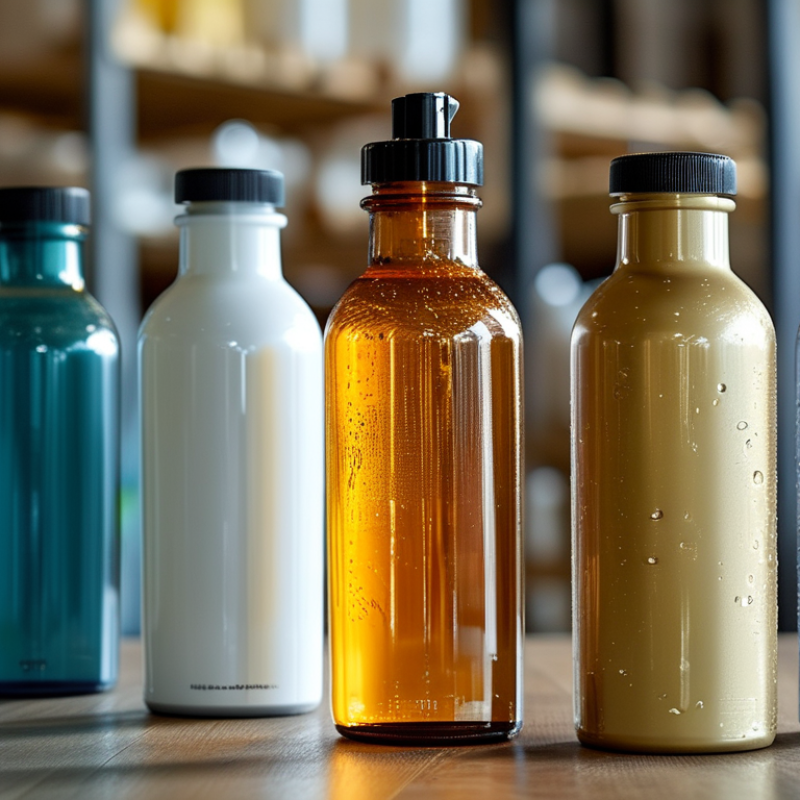
Define Product Requirements for Bottles and Containers
Global sourcing starts with a measurable bottle or container brief. Before contacting suppliers, define the product’s purpose and filling conditions. State the product type, fill volume, empty weight, and expected shelf life. A 250 ml container may need 260 ml capacity for safe filling. Specify the material, color, transparency, surface finish, and closure system. If contents react with light or oxygen, request suitable barrier performance. Record neck size, thread type, height, diameter, and acceptable tolerances. Small details prevent expensive misunderstandings.
In practical sourcing work, one overlooked measurement can disrupt an entire filling line. Ask for technical drawings, material specifications, and inspection standards. Do not rely on photos alone. Confirm whether the container works with your cap, pump, label, and sealing process. Define drop resistance, leakage limits, torque requirements, and temperature exposure. Samples should match planned production materials whenever possible. Keep written approval records for every sample revision. I once treated a minor shoulder shape as cosmetic, but it affected label placement and packing efficiency.
Requirements also need evidence, not only supplier promises. Request test reports for strength, leakage, chemical compatibility, and applicable food-contact or packaging requirements. Check whether results match your destination markets and intended use. Packaging specifications matter too, especially for long-distance transport. State carton quantity, protective separators, pallet limits, and moisture controls. Plan a pilot order before committing to larger volumes. Do not hide uncertainty in the brief; identify it and test it. Leave room for refinement, because the first specification is rarely perfect.
| Requirement Dimension | Recommended Specification | Common Options or Reference Values | Why It Matters in Global Sourcing | Verification Method |
|---|---|---|---|---|
| Container Material | Select the material according to product compatibility, impact resistance, recyclability, and transport conditions. | Glass; PET; HDPE; PP; aluminum; tinplate | Material selection affects product protection, shipping weight, breakage risk, recycling claims, and available manufacturing processes. | Review technical data sheets, migration information, recycled-content documentation, and compatibility test results. |
| Nominal Capacity | Define the fill volume and the required headspace separately. | 30 mL, 60 mL, 100 mL, 250 mL, 500 mL, 1 L | Nominal capacity influences retail positioning, freight calculations, filling-line settings, and package labeling. | Confirm water capacity and overflow capacity using a calibrated scale or volumetric test. |
| Neck Finish and Closure | Specify the neck standard, thread profile, closure type, liner, tamper evidence, and application torque. | Continuous-thread screw closure; snap-on closure; pump; sprayer; crimp finish | Closures from different suppliers may not be interchangeable even when the container diameter appears similar. | Check dimensional drawings, thread gauges, closure fit, torque, leakage, and tamper-evidence performance. |
| Overall Dimensions | Define height, body diameter, shoulder profile, base diameter, and maximum shipping envelope. | Height and diameter specified in millimeters; tolerances stated on the approved drawing | Dimensions determine carton design, pallet utilization, automated filling compatibility, and storage efficiency. | Measure production samples with calibrated calipers, gauges, or a coordinate measuring system. |
| Dimensional Tolerance | Set tolerances for every critical dimension instead of using a general visual tolerance. | Typical molded-package tolerances may range from approximately ±0.2 mm to ±0.8 mm, depending on size, material, and process. | Clear tolerances reduce assembly problems and prevent disputes when production is transferred between countries. | Use an approved engineering drawing, first-article inspection, and statistical sampling during production. |
| Barrier Performance | Define protection requirements for oxygen, moisture, light, aroma, and carbon dioxide where applicable. | Standard polymer; multilayer polymer; coated glass; opaque or UV-protective package | Barrier requirements affect shelf life, product stability, material selection, and the need for secondary packaging. | Conduct oxygen transmission, water-vapor transmission, light-transmission, and shelf-life testing as appropriate. |
| Product Compatibility | Test the actual formula or product, including fragrance, alcohol, oil, acid, alkali, and solvent exposure where relevant. | Short-term contact screening plus accelerated aging at elevated temperature | Some formulas can cause stress cracking, swelling, discoloration, odor transfer, or closure failure over time. | Perform filled-package compatibility testing under real storage, transport, and orientation conditions. |
| Temperature Resistance | Define filling temperature, storage range, transport range, and any hot-fill or sterilization process. | Ambient filling; hot filling; refrigeration; freezer storage; thermal cycling | Temperature changes can deform containers, reduce seal performance, or create internal pressure and vacuum. | Test filled containers through thermal cycling, pressure or vacuum checks, and drop testing after conditioning. |
| Seal and Leakage Control | Specify leak-tightness criteria, closure torque range, liner material, and test orientation. | Vacuum decay; pressure decay; dye penetration; inversion test; torque measurement | Leakage can create safety issues, product loss, customs complications, and damage to other cargo. | Use a defined sampling plan and test containers after filling, capping, transport simulation, and aging. |
| Tamper Evidence | Choose a tamper-evident feature appropriate to the product category and destination-market requirements. | Breakable ring; shrink band; foil seal; tear strip; induction seal | Tamper evidence supports consumer confidence and may be expected for food, pharmaceutical, personal-care, or chemical products. | Verify first-opening evidence, seal integrity, removal force, and compatibility with the filling line. |
| Decoration and Identification | Define print area, color references, label material, barcode placement, and surface treatment. | Screen printing; offset printing; pressure-sensitive label; in-mold label; embossing | Decoration requirements influence mold design, minimum order quantities, lead time, ink selection, and inspection standards. | Approve a color standard, artwork proof, barcode scan test, rub test, and label adhesion test. |
| Regulatory and Safety Requirements | Identify all destination markets and product categories before finalizing the material and supplier. | Food-contact requirements; cosmetic packaging requirements; pharmaceutical packaging controls; chemical-resistance requirements | Requirements differ by market and intended use. Documentation may be needed for composition, migration, traceability, and safety. | Collect declarations of compliance, test reports, material composition records, and batch traceability documents. |
| Sustainability Criteria | Set measurable targets for recycled content, recyclability, lightweighting, refillability, and packaging weight. | Mono-material design; post-consumer recycled content; reusable format; reduced component count | Sustainability claims and waste-management systems vary between countries, so the design should be assessed for each destination. | Review supplier evidence, calculate packaging weight, confirm material identification, and assess local recycling compatibility. |
| Logistics and Palletization | Define carton quantity, carton dimensions, pallet pattern, maximum stack height, and shipping load limits. | Export cartons with dividers or trays; standardized pallet footprint; stretch-wrapped loads | Efficient palletization reduces freight cost and damage while improving container utilization across international routes. | Perform carton compression, vibration, drop, stacking, and simulated transit testing. |
| Quality Acceptance Criteria | Create a signed reference sample and classify defects as critical, major, or minor. | Critical: leakage or contamination; Major: dimensional or functional failure; Minor: cosmetic variation within limits | A consistent inspection standard prevents disagreements caused by subjective judgments between buyer, factory, and inspection agency. | Use an approved quality specification, sampling plan, inspection checklist, and retained production samples. |
| Supply Continuity | Define annual volume, forecast flexibility, tooling ownership, alternate materials, and approved backup sources. | Capacity reservation; dual sourcing; spare molds; documented process parameters | Global supply can be affected by port delays, resin shortages, regulatory changes, tooling failures, or regional disruptions. | Review capacity records, business-continuity plans, tooling agreements, and supplier performance history. |
Related Posts
-
Choosing the Right Plastic Bottle Supplier for Sustainable Packaging Solutions
-

China Best Pet Bottles for Eco Friendly Packaging Solutions?
-

China Top Glass Dropper Bottles for Global Buyers Guide?
-

Essential Checklist for Choosing the Right Plastic Tubes for Your Business Needs
-

Masterfully Crafted: The Global Impact of China's Best Glass Dropper Bottles on Consumer Wellness
-

Top Uses for Glass Dropper Bottles in Everyday Life?