How to Choose the Best Thermal Cash Register Paper?
Choosing the right Thermal Cash Register Paper can significantly affect business operations. According to industry expert John Bennett, "Quality paper leads to smoother transactions." This insight highlights the importance of selecting the best materials for your cash register needs.
Thermal Cash Register Paper comes in various grades and sizes. Each quality contributes to durability and print clarity. Businesses often overlook the consequences of using subpar paper, leading to faded prints and dissatisfied customers. Imagine a scenario where important transaction details go unreadable. It can cause disputes and harm your reputation.
Understanding different types of Thermal Cash Register Paper can be daunting. The thickness, length, and coating all play roles in performance. Some might choose cheaper options, ignoring potential long-term costs. In the end, making informed choices about your cash register paper is essential. It reflects the professionalism of your business and affects customer experience.
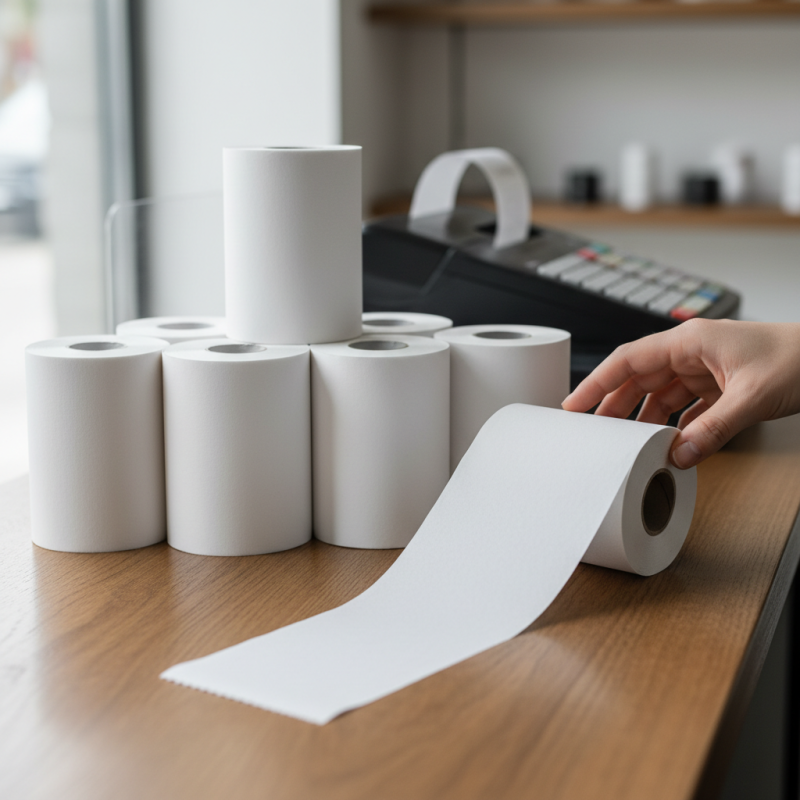
Understanding Thermal Cash Register Paper Types
When selecting thermal cash register paper, understanding its types is crucial. Thermal paper primarily falls into two categories: direct thermal paper and thermal transfer paper. Direct thermal paper contains a heat-sensitive coating that reacts to thermal printers. This type is widely used, especially in retail and hospitality sectors. Many industry reports indicate that 80% of cash registers use direct thermal paper due to its convenience and cost-effectiveness.
Thermal transfer paper, on the other hand, requires a ribbon to transfer ink onto the paper. It results in more durable and smudge-resistant prints. This type is often utilized in industrial applications and situations where longevity matters. Reports suggest that while direct thermal paper dominates the market, thermal transfer papers are gaining traction in environments with harsher conditions.
Choosing the right type isn't just about preference; it's vital to assess operational needs. Some businesses overlook environmental factors, such as heat and humidity, which can affect print quality. A poorly chosen paper type can lead to faded receipts or paper jams, causing frustration and inefficiency. Understanding these variables can mean the difference between optimal performance and unnecessary expenditures.
Key Factors to Consider When Choosing Thermal Paper
When choosing the best thermal cash register paper, several key factors come into play. The paper’s thickness is crucial. Typically, thermal paper thickness ranges from 48gsm to 75gsm. A thicker paper, around 70gsm, provides better durability. This can reduce wear in high-volume transactions. However, thicker paper may also jam more frequently. It’s essential to balance durability and operational efficiency.
Print quality is another significant aspect. High-quality thermal paper creates sharp images and clear text. Research shows that poor-quality paper can lead to fading and smudging. In fact, studies indicate that 30% of retailers experience customer complaints due to legibility issues. Businesses should also consider the paper’s sensitivity to heat. High sensitivity paper reacts quickly, leading to faster printing speeds. Yet, this can sometimes lead to overheating, causing print errors.
Environmental impact is a growing concern. Many thermal papers contain BPA, a chemical that poses health risks. Recent reports suggest that 60% of thermal papers may contain BPA. Retailers are increasingly seeking BPA-free options. Although these papers may cost slightly more, they enhance sustainability and consumer confidence. Choosing the right thermal paper involves evaluating these factors carefully.
Evaluating Quality and Durability of Thermal Register Paper
When choosing thermal cash register paper, quality and durability are crucial. High-quality paper reduces the risk of fading and smudging. Faded receipts can lead to customer confusion and disputes. The best paper provides clear prints that withstand time and handling.
Durability also matters. Some papers can deteriorate quickly, leading to frequent replacements. This can be costly and disruptive. Look for papers that are thick and have a sturdy feel. Often, thicker papers resist tearing better. However, don’t just settle for the thickest option; some thick papers may not print as clearly.
Testing different types can be beneficial. Run some tests in real conditions to evaluate performance. Watch how well the paper holds ink. A paper that performs well in one environment may struggle in another. Finding the right balance between cost and quality is important. Sometimes, a lower-cost option can outperform premium choices, leading to a frustrating search.
Comparing Quality and Durability of Thermal Cash Register Paper
The Importance of Paper Size and Compatibility
Choosing the right thermal cash register paper is crucial for businesses. The size and compatibility of the paper play a key role in ensuring smooth operations. Most cash registers have specific paper sizes they accept. Using the wrong size can lead to jams and delays. Reports indicate that over 30% of businesses experience issues related to incompatible paper types.
Paper size commonly ranges from 57mm to 80mm in width. It’s essential to check the specifications of your cash register. Using the right size maximizes efficiency and reduces waste. Accurate dimensions contribute to better performance and durability of the printouts.
Tips: Always keep an extra roll on hand. An unexpected paper shortage can disrupt sales. Consider purchasing in bulk to save costs. Regularly inspect your printer's thermal head. Over time, it can wear down, affecting print quality. Sometimes, businesses overlook the importance of sourcing quality materials. Higher quality paper often leads to clearer receipts and less frequent replacements.
Cost-Effectiveness and Supplier Options for Thermal Paper
When selecting thermal cash register paper, cost-effectiveness plays a significant role. Businesses must weigh the price against the quality. Cheaper options might seem appealing but can lead to issues. Low-quality paper can jam printers or produce faded receipts. This costs time and money in the long run.
Exploring supplier options is also crucial. Many local and online suppliers offer various thermal paper types. It’s essential to compare prices and reviews. Some suppliers provide bulk discounts. This can yield substantial savings for high-usage businesses. However, it is important to check return policies and customer service.
Be cautious about hidden costs. Shipping fees and handling charges can add up. Not all suppliers are transparent about these extra costs. Taking time to research suppliers will help find the best fit. Making informed decisions can lead to long-term benefits. Quality paper should be a priority along with affordability.
How to Choose the Best Thermal Cash Register Paper? - Cost-Effectiveness and Supplier Options for Thermal Paper
| Paper Type | Width (mm) | Length (m) | Average Cost ($) | Supplier Options |
| Thermal Paper | 80 | 100 | 30.00 | Supplier A, Supplier B |
| Eco-Friendly Paper | 80 | 200 | 35.00 | Supplier C, Supplier D |
| Standard Paper | 57 | 50 | 25.00 | Supplier E, Supplier F |
| High-Quality Thermal Paper | 80 | 150 | 40.00 | Supplier G, Supplier H |