
China Top 10 Wide Mouth Glass Jar Manufacturers for Global Buyers
Wide Mouth Glass Jars look simple on a shelf: a broad opening, a threaded lid, and clear walls showing every ingredient. For global buyers, however, choosing a supplier involves more than appearance. Glass weight, dimensional consistency, closure fit, packaging protection, and production capacity can shape costs and delivery reliability. Small details matter.
Grand View Research valued the global glass packaging market at USD 55.47 billion in 2022 and projected a 4.2% compound annual growth rate from 2023 to 2030. FEVE, the European Container Glass Federation, reported an 80.1% glass packaging collection-for-recycling rate in the EU in 2021. These figures show a large, evolving market, but they do not prove that every jar or factory meets a buyer’s needs. Check specifications and request current documentation.
FEVE Secretary General Adeline Farrelly has described glass as a “permanent material.” That idea is useful, but practical sourcing still depends on design, manufacturing control, and responsible recycling systems. A wide mouth can simplify filling and cleaning; it can also require careful lid matching and transit testing. Not glamorous. Still important.
This guide introduces ten manufacturers for international buyers. It focuses on product range, customization, export experience, and the questions buyers should ask before ordering. A polished website is not enough. Compare samples, tolerances, lead times, and quality records. Some details may remain unclear until a factory answers directly. That is worth noticing.
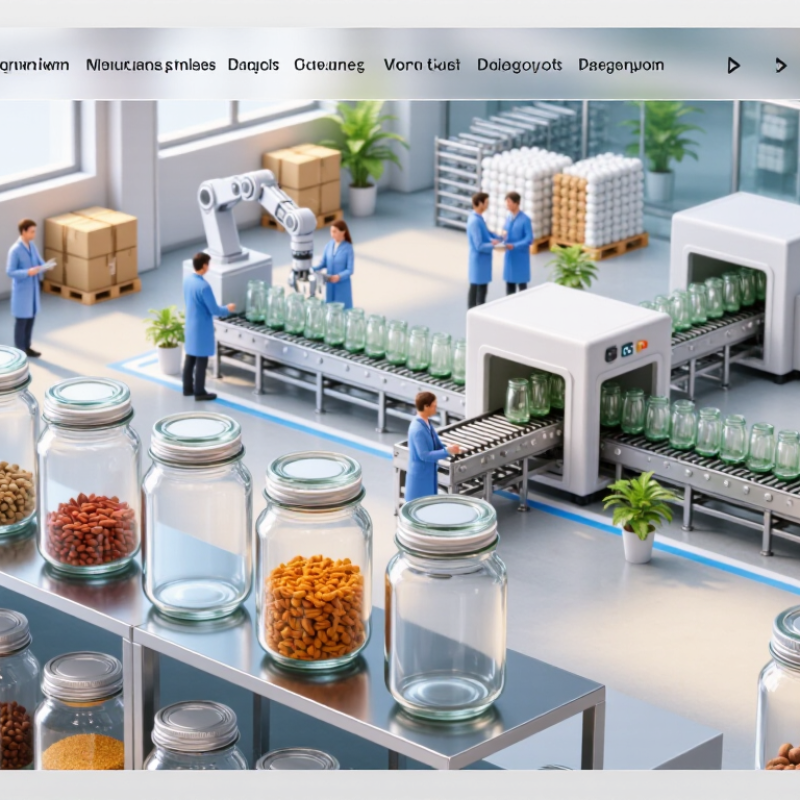
Understanding Wide Mouth Glass Jars and Their Global Uses
Wide mouth glass jars have openings that are broad enough for easy filling, scooping, and hand washing. Their straight sides also help users see the contents clearly. Common uses include storing dry foods, spices, cosmetics, craft supplies, and small household items. The glass does not readily retain odors, but it can break if dropped. That matters.
For global buyers, jar choice depends on more than capacity. Check the opening diameter, wall thickness, base stability, and closure fit against the intended use. A 500-milliliter jar may suit pantry storage, while a shorter, wider shape can make powders easier to reach. Buyers should request samples and inspect them under normal handling conditions. A wide opening is convenient, though it can make pouring less controlled. Not always a perfect trade-off. Shipping tests and clear packaging specifications can help reveal weak points before larger orders.
Tips: Match the opening to the tool or hand that will enter the jar. Confirm dimensions in writing, and test the lid with the actual product. For moisture-sensitive contents, evaluate the full closure system rather than relying on the jar alone. Keep it practical.
China Top 10 Wide Mouth Glass Jar Manufacturers for Global Buyers - Understanding Wide Mouth Glass Jars and Their Global Uses
The table compares ten common wide-mouth glass jar applications and their typical packaging considerations. It is an application guide, not a ranked list of manufacturers. Capacity ranges are indicative; actual specifications vary by jar design, closure, and supplier.
| No. | Global application | Indicative capacity range | Why a wide mouth is useful | Buyer specification points |
|---|---|---|---|---|
| 1 | Jam, preserves, and spreads | About 120–500 mL | Makes filling, spooning, and cleaning easier. | Confirm food-contact suitability, closure fit, and compatibility with the intended filling and processing method. |
| 2 | Pickles and preserved vegetables | About 250–2,000 mL | Helps accommodate whole or large-cut pieces and allows easier removal. | Check opening clearance, headspace, closure sealing, and suitability for the planned packing process. |
| 3 | Honey and syrups | About 120–1,000 mL | Provides room for filling and access with a spoon or suitable utensil. | Select a compatible lid and liner; verify filling temperature limits with the jar supplier. |
| 4 | Spices, herbs, and dry seasonings | About 30–250 mL | Makes it easier to refill and scoop dry ingredients. | Consider a moisture-resistant closure and whether a separate shaker insert is needed. |
| 5 | Pantry storage for grains, beans, and snacks | About 500–3,000 mL | Allows convenient access to bulk dry goods and simplifies cleaning. | Compare usable volume, shelf dimensions, closure style, and whether the jar is intended for repeated household use. |
| 6 | Cosmetics and personal-care products | About 30–500 mL | Supports access to creams, balms, salts, and other viscous products. | Test product compatibility, closure and liner materials, decoration durability, and leakage performance. |
| 7 | Nutritional powders and supplements | About 100–1,000 mL | Facilitates filling and access with a scoop. | Specify the closure, any tamper-evident feature, labeling area, and applicable destination-market requirements. |
| 8 | Candles and home-fragrance products | About 100–1,000 mL | Offers a broad opening for pouring wax or arranging decorative contents. | For candle use, validate the complete vessel and wick system under the intended conditions; ordinary jars are not automatically candle-safe. |
| 9 | Food-service and catering storage | About 1,000–5,000 mL | Makes it easier to access larger quantities and clean the interior. | Check filled weight, handling requirements, storage footprint, and whether the closure suits frequent opening. |
| 10 | Craft supplies and small-item storage | About 30–2,000 mL | Provides easy access to items such as beads, buttons, and fasteners. | Choose the capacity and closure based on item size, storage environment, and intended reuse. |
Note: “Wide mouth” is a product description rather than a single universal opening-size standard. Request a technical drawing and sample to confirm jar dimensions, mouth finish, capacity, closure compatibility, and suitability for the intended use.
Related Posts
-

Discover Unmatched Manufacturing Excellence with China's Premier Glass Jar Factory
-

Exceptional Glass Jar Craftsmanship: China's Commitment to Global Quality Service
-

How to Choose the Best Glass Bottle Supplier in China?
-

Ultimate Guide to Choosing the Right Glass Packaging for Your Products
-

7 Best Wide Mouth Glass Jars That Boost Your Preserving Efficiency by 30% in 2023
-

Best Plastic Bottles for Global Suppliers to Consider?