
What Are 4x3 Thermal Labels and How Do They Work?
4x3 Thermal Labels are compact, practical media used to print shipping details, inventory codes, product information, and tracking data. Their name describes their size: four inches wide and three inches high. Unlike ordinary paper labels, they create images through controlled heat. A thermal printer applies heat to selected areas, producing text, numbers, barcodes, or simple graphics without liquid ink.
This process looks simple. It is not always simple in practice. Label material, printer settings, storage conditions, and handling can affect readability. Direct thermal labels react to heat-sensitive coating, while thermal transfer labels use a heated ribbon. That difference matters. Direct thermal labels suit short-term shipping use, but sunlight or high temperatures may darken them. Thermal transfer labels usually offer stronger durability for products, shelves, and long-term records.
Mike Fairley, a respected label-industry analyst and editor, has observed, “The label is often the final, visible link between data and the physical product.” That idea explains why choosing the correct 4x3 thermal labels deserves more attention than their small size suggests. A poorly matched label can curl, fade, jam, or produce a weak barcode. I have seen how one unreadable corner can slow an entire packing station. Small detail. Real consequence.
This guide explains how 4x3 thermal labels work, which printer technology they require, and where they perform best. It also examines adhesive choices, print durability, barcode quality, and common setup mistakes. Some applications need more than a convenient standard size. That is worth remembering.
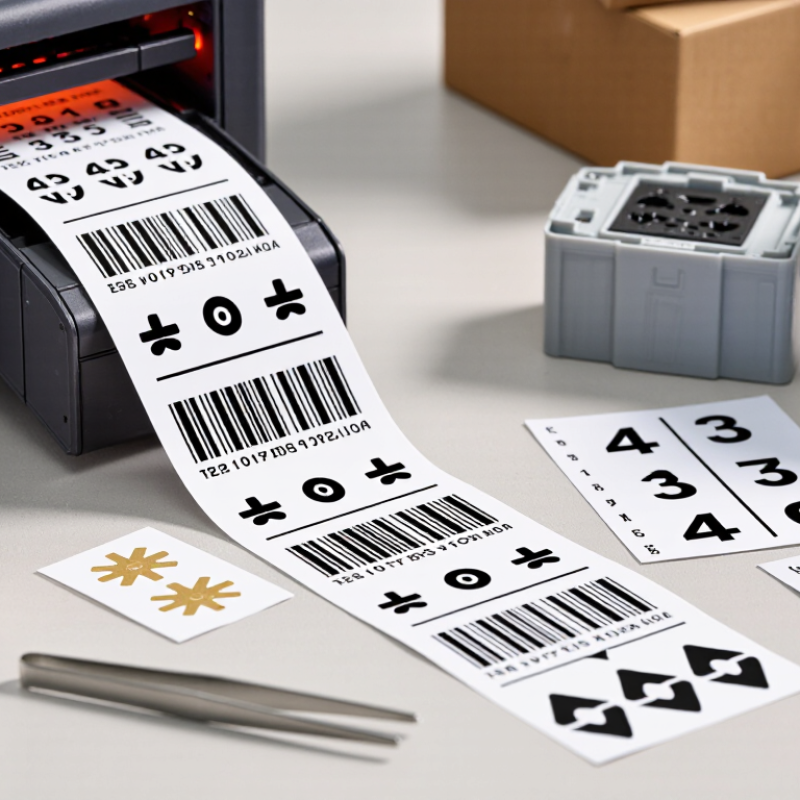
What 4x3 Thermal Labels Are and Where They Are Used
4x3 thermal labels are adhesive labels measuring four inches by three inches. They are widely used for shipping, inventory, product identification, and shelf organization. Most are made for direct thermal printing, where a printer applies controlled heat to a heat-sensitive surface. Dark text appears without ink, toner, or a separate ribbon.
These labels suit warehouses because their size fits common cartons, bins, and packing stations. Retail staff may use them for price details, stock codes, or return information. Clinics and offices can also use them for files, containers, and appointment materials. However, direct thermal labels can fade under strong sunlight, heat, or prolonged storage. That limitation is easy to overlook. A label may look clear today but become unreadable months later.
Tips: Match the label type to its environment. Test adhesion on cardboard, plastic, or textured surfaces before ordering large quantities. Keep unused rolls sealed and away from heat. Check the printer settings carefully, since incorrect sizing can waste labels and produce cropped information. For long-term records, consider a more durable label material or thermal transfer printing. Even then, results depend on storage conditions and handling.
The Main Materials and Design Features of 4x3 Thermal Labels
A 4x3 thermal label measures four inches wide and three inches tall. Its performance depends less on size than on material and surface design. Most direct thermal labels use a heat-sensitive coating over paper or synthetic film. A printer’s heated dots darken selected areas, creating text, barcodes, or simple graphics. No liquid ink is required. That sounds simple, but storage conditions can change results.
The face stock is the visible layer. Paper is economical and suitable for indoor parcels, shelves, and short-term records. Synthetic film handles moisture, friction, and uneven surfaces better. It usually costs more. Beneath the face stock, an adhesive must match the application. Permanent adhesive grips cardboard strongly, while removable adhesive can reduce residue on reusable containers. Temperature matters. A label may fail if applied to a cold box.
A release liner protects the adhesive until printing. Its thickness affects feeding, peeling, and automatic application. Clean die-cut edges help sensors detect each 4x3 label accurately. The thermal coating should be uniform, or barcodes may show pale lines. For long outdoor exposure, direct thermal material is often a weak choice. Thermal-transfer construction may provide better durability. In practice, test the label on the actual carton, at the real print speed, and after expected handling. I would not trust a perfect sample alone. Small variables, such as dust or humidity, can still create unreadable marks.
How Thermal Printing Creates Images Without Ink
What Are 4x3 Thermal Labels and How Do They Work?
A 4x3 thermal label measures four inches by three inches, a common size for shipping, warehouse, and inventory workflows. Its surface contains heat-sensitive chemicals rather than ordinary ink. A thermal printer sends digital instructions to a printhead, where hundreds of tiny heating elements activate selected areas. Those heated dots darken and form text, barcodes, or graphics. The image appears almost instantly.
Direct thermal printing needs no ink cartridge, ribbon, or liquid toner. The label coating changes color when heat reaches it, much like a controlled chemical reaction. This design reduces consumable waste and simplifies maintenance. Pitney Bowes reported more than 160 billion parcels in global parcel volume, showing why fast, readable labeling remains operationally important. Every label must scan quickly, even under pressure.
However, the process has limits. Direct thermal labels can fade under prolonged heat, sunlight, or friction. A warehouse near a loading dock may expose labels to all three. Smithers’ thermal printing research identifies durability and application conditions as continuing industry concerns. That point deserves attention. A 4x3 label is not automatically suitable for every environment. Test the actual material, printer settings, barcode size, and storage conditions before large-scale use. Small adjustments matter.
What Are 4x3 Thermal Labels and How Do They Work? - How Thermal Printing Creates Images Without Ink
| Data Dimension | Typical Specification or Fact | How It Relates to 4x3 Thermal Labels |
|---|---|---|
| Nominal label size | 4 × 3 inches, or approximately 101.6 × 76.2 millimeters | Provides a compact landscape-format area for addresses, barcodes, item details, or short instructions. |
| Printing method | Most 4x3 labels are used with direct thermal printing; some are designed for thermal-transfer printing. | The correct label coating must match the printer technology to produce a clear, durable image. |
| Image-forming principle | A printhead applies controlled heat to heat-sensitive areas of the label surface. | The heated coating darkens and forms text, graphics, and barcodes without liquid ink. |
| Ink or toner requirement | Direct thermal printing requires no ink, toner, or ribbon. | Fewer consumable components can simplify routine label production and reduce supply changes. |
| Common label material | Direct thermal labels generally use paper with a heat-sensitive coating; synthetic face stocks are also available. | Material selection affects appearance, flexibility, moisture resistance, and service life. |
| Print resolution | Common thermal printer resolutions include 203, 300, and 600 dots per inch. | Higher resolution can improve small text and detailed graphics, while 203 dpi is often sufficient for standard labels. |
| Barcode suitability | Thermal printers can produce one-dimensional and two-dimensional barcodes when the correct size and contrast are used. | The 4x3 format can accommodate a barcode together with human-readable identification data. |
| Typical uses | Shipping identification, inventory control, product labeling, shelf marking, and short-term tracking. | The size balances readable information with efficient use of label stock. |
| Direct thermal durability | Images may fade or darken when exposed to prolonged heat, sunlight, friction, oils, or chemicals. | Direct thermal 4x3 labels are best suited to applications where long-term environmental resistance is not critical. |
| Thermal-transfer durability | Thermal-transfer printing uses a heated ribbon to transfer ink onto a compatible label surface. | It is generally preferred for labels requiring greater resistance to moisture, abrasion, chemicals, or extended storage. |
| Image color | Standard thermal printing is commonly monochrome, although selected materials can create limited color effects. | Black-and-white output is typically used for text, barcodes, and simple symbols. |
| Printer compatibility | The printer must support the label width, media thickness, core size, roll orientation, and required print language. | Checking these specifications helps prevent alignment problems, jams, and incomplete images. |
| Print quality factors | Heat level, print speed, printhead condition, label coating, and media alignment all affect image quality. | Balanced settings help produce sharp edges, readable text, and scannable barcodes. |
| Main operational benefit | The printing process has few moving consumable parts and can produce labels quickly. | This makes 4x3 thermal labels practical for frequent, on-demand identification tasks. |
Choosing the Right 4x3 Labels and Compatible Printers
A 4x3 thermal label measures four inches wide and three inches high. It prints through heat, so ordinary ink is unnecessary. Direct thermal stock suits short-term shipping or storage labels. Thermal transfer stock lasts longer in heat, sunlight, or rough handling. The right choice depends on the label’s life, not just its size.
Check the printer’s maximum media width first. A four-inch label may require a small side margin for reliable feeding. Confirm the roll core, outer diameter, label gap, and sensing method. Some printers detect gaps, while others need black marks. Use a printer with enough resolution for barcodes and small text. Two hundred three dpi may work for basic layouts, but three hundred dpi gives cleaner fine details. Printer settings matter too.
Test before ordering in bulk. Print ten labels and inspect the first, middle, and last one. Look for fading, crooked alignment, peeling edges, or unreadable bars. Adhesive should match the surface, whether it is cardboard, plastic, or a cold package. I once selected a strong adhesive for recycled boxes, but the rough surface caused uneven contact. That mistake was avoidable. Leave space around critical information. Crowded designs often scan poorly, even when the printer is capable. Compatibility is a practical match between stock, printer, settings, and working conditions.
Common Applications and Proper Handling of Thermal Labels
A 4x3 thermal label measures four inches wide and three inches tall. It prints through heat, not liquid ink. Direct thermal stock darkens when a heated printhead touches its chemical coating. Thermal-transfer stock uses a ribbon instead. The distinction matters.
These labels suit shipping cartons, warehouse bins, product identification, and return packages. The 2023 Global Parcel Shipping Index reported 161.8 billion parcels worldwide in 2022. That volume explains the demand for fast, readable labels. A 2024 thermal-printing market assessment also forecasts continued growth through 2028, driven by logistics and retail operations.
Handling still decides performance. Store unused rolls flat, sealed, and away from sunlight, moisture, and temperatures above 25°C. Keep the printable surface clean. Finger oils can create pale gaps or uneven barcodes. Load the roll squarely, then calibrate the sensor before a long batch. Test one label first. Small habits prevent expensive reprints.
Direct thermal labels can fade under heat, friction, or ultraviolet light. They work well for short-term parcel movement, but not every archive. Thermal-transfer labels usually provide stronger durability for outdoor bins and long storage. A practical weakness remains: “water-resistant” does not mean waterproof. Condensation can still soften adhesives and distort scans. Inspect the first and last labels from each roll, because quality may vary between batches.
